Published: December 2025
Publisher: Industrial Experts Forums Pakistan
Dr. Shahid Waheed, General Manager, A One Feeds Hyderabad
Feed milling has been evolving rapidly, particularly across engineering and technological segments. Electrical systems have advanced from basic controls to electronic instruments such as inverters, variable frequency drives (VFDs), and specialized computer software, and now to artificial intelligence (AI) tools integrated with internet-based remote operating systems. Future feed mills will rely increasingly on automation, reducing human intervention. AI-supported systems, combined with cyber-linked platforms, will manage operational control, accuracy, and quality in feed production.
This article highlights the historical advancements leading to today’s technology upgrades, which have significantly enhanced nutritional accuracy and manufacturing precision.
Silo and grain drying Operations
Earlier, grain unloading, sampling, and quality assessment relied on visual checks by managers. Moisture was measured with oven tests or portable moisture meters such as DICKY JOHN’S moisture meters.
Today, Near-Infrared (NIR) technology has revolutionized this step, enabling rapid and accurate proximate analysis right at the receiving point. Modern unloading systems halt automatically if conveyors or elevators feeding the silos encounter a fault.
Proximity sensors, level indicators, amperage monitors, and feedback-controlled motors ensure smooth and safe operation. What was once a manual, experience-based task is now guided by real-time intelligent feedback.
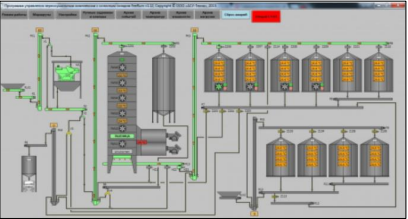
Corn dryers have become essential in feed processing. These units operate on sophisticated combinations of temperature, pressure, moisture, airflow, and grain opacity sensors or even many modern systems enhanced by AI tools. NIR-based pre- and post-drying moisture evaluation enhances accuracy. The equipment integrates mechanical, electrical, pneumatic, and electronic subsystems under a central software platform. Remote monitoring through mobile applications has made dryer operation safer and more efficient than ever before.
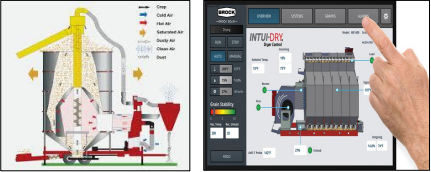
Antifungal-Organic Acid Spray
Application of propionic acid and other mold inhibitors is now standard practice for safe corn storage. Automated spray systems use flow meters and speed sensors to ensure consistent dosage across variable grain flow rates. Real-time NIR scanning can also monitor uniformity.
This automation reduces human exposure to chemicals and ensures long-term grain stability.
Silo Storage and Air Flow Control
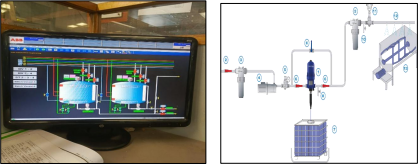
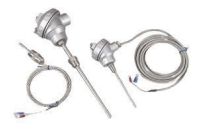
Silo storage for a long time needs a very sensitive sensor-based automation software system. Temperature control through a thermocouple is present in every silo now. Moisture and level sensing systems like ultrasound wave-based indicators and proximity switches can give better awareness of grain conditions in a silo. A well precise monitoring device can take actions like starting the fan after the detection of heat generation in certain patches. Lower and upper top fan sequence, timing, and start and stop routines can be fed to the operating computer system attached to your silo operating room.
Silo storage is the most expensive work in a feed mill. The decision to save thousands of tons of corn is never costly compared to AI based silo control electronic and computerized systems. These systems also give you accuracy in stock knowledge and for audit purposes. Like all other systems, this update is available on your cell phone through cyber cloud-based Android phone systems.
Feed Processing Automation
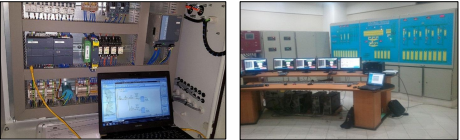
Feed mill automation was previously based on a combination of mechanical, pneumatic, electrical, electronic panel, and computer assisted systems. We had seen these systems during the nineties. Mainly based on batching and mixing software, these program controllers had an electric mimic panel (lights screen board) and an optional electrical board. Later, with progressive weigh balance electronic signals, liquid additions, oil application systems, and complete receiving from silo to packing stage auto bagging systems, software is now much more detailed, complex, and very accurate.
Ingredients Receiving line automation
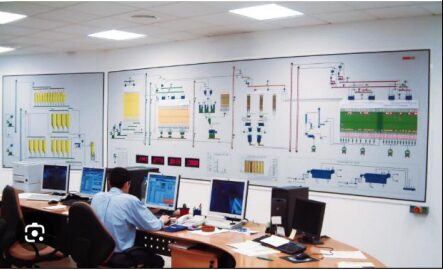
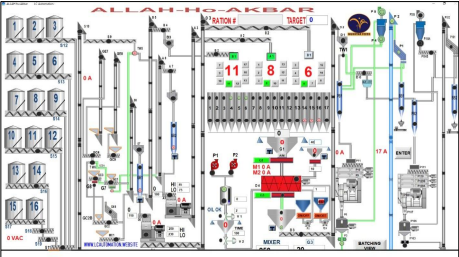
All bins are fed with multiple options of receiving lines from silos (for example silo 1 to 20) and warehouse conveyors A, B, C, D, and so on. In the pre grinding system, options like grinders, roller bodies, crumbling, sieving, and bypass options are also provided on the PLC control computer screen. Ingredient selection of line A will fill the desired bin only. This line selection will block any interfering supply route through these elevators and will also show any trouble occurring in the path you have selected.
The ingredient bins have low level and highlevel indicators that give guidelines for filling. Usually high bin (silo) levels are operating signals, but the low level is only a display signal.
Batching Systems
Although every year batching systems are upgraded for Windows operating software, modern systems are now very fast and have programming and linkage through SCADA, Ethernet, and high-speed processors. Batching speed with accuracy was a major challenge in the past. Now, big names like Siemens and even Pakistani software engineers provide the best conveyor (batching feeders) speed monitoring inverters, pre-value correction, and free-fall adjustment.
AI tools are applied along with reliable weight indicators, allowing precise application and accuracy within minimal time. Record keeping with time, formulation, batches, collective data, and formula target and actual weights is available on almost every software system in Pakistan.
Premix Functions Automations
Application of a barcode system for detecting the correct medicine, vitamin, or enzyme is successfully applied in some factories. Bin dosage is sometimes used for bulk vitamins, minerals, and other amino acids. There are some limitations to bin dosage if the production unit size is small or if maintaining medicine inventory is costly. Bulk batching and mixing, however, is always advisable with a proper carrier and sufficient time. The most important aspect is the weight and tag code correction of premix in the main mixer, synchronized with the major ingredient batch. This is the point where barcode and gravimetric cross-checking automation is most helpful.
Main Mixing (mixer –heart of mill) control
In the past, mixing was a dry material process. Now, multiple applications are being used. When two mixers are used simultaneously, software timing becomes more critical. Oil, water, organic acids, liquid enzymes, and liquid methionine are applied. All these systems have independent software control.
Synchronizing the time frame of each segment through the mill operating master control PLC system is a crucial step. Automation in mixers is not just about instrument and software installation. It is basically the optimal coordination of electronic, pneumatic, mechanical, electrical, gravimetric, volumetric, thermal (steam), and pressure monitoring devices with the controlling computer-based software, all working in harmony.
Steam Addition, Conditioning & Pelleting Control
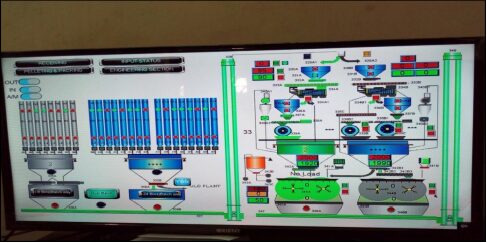
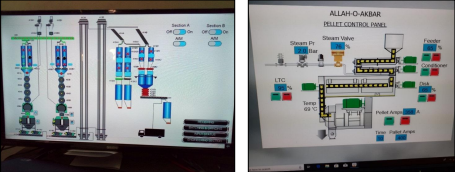
In terms of routine operations, pelleting is the most important part of a feed mill. In the past, an operator would start the feeding system to the conditioners, manually adjust the steam valve, set the pellet mill main motor amperage, and monitor smooth running by staying near the pellet mill. Currently, automation of steam in pellet milling has changed this scenario. With the application of electronic steam control valves, feeder speed, steam valve, temperature, and motor amperage are now synchronized for optimal pellet mill performance.
Maximum production can be achieved with this automated steam system. Pellet mills control systems are much more complex and precise, receiving order signals and executing actions very quickly.
Many sensors and monitoring devices such as speed monitors, RPM, voltage and frequency devices, level detectors in feeder bins, conditioner metal detectors, dump chute bypass applications, automatic oil and lubrication, scheduled greasing, roll adjustments during operation, airlock cooler sensor control, shear pin signal detection, air velocity monitors, inverter controllers, sieve rotation devices, cooler level detectors, moisture sensors, cyclone speed monitors, and other detection devices are all controlled through these mega-control systems. These software systems can be managed from the operating room HMI or monitored on cell phones even when you are miles away from the feed mill.
Packing systems
Many automatic systems for 25, 40, 50 kg weight auto bagging and stitching are now being used in almost every mill. A conveyor ahead of packing machine assists fast loading or stacking facility. Feed bins high level indicators help in feedback control to stop chocking of elevators, sifters & low level signal helps in smooth packing labour operations
Others
Solar system operations, green energy synchronizing devices, generators, boiler water, temperature, fire, pressure and safety systems, compressor room operations, smoke detection, fire safety, and other segments are also monitored and operated through AI, IT, and computerized systems.
SUMMARY
Feed mill automation is the future of industry. Human error can lead to the destruction of feed quality standards and quality assurance. Human resource management is always a difficult task for managers
and mill owners. Invest in IT-based computerized software for the best feed accuracy. Save money, save time.
The writer, Dr. Shahid Waheed, a renowned Feed Nutritionist, has 25 years of experience in six different feed mills with various automation systems. The above article is a combination of his practical experience and technology implementation in feed production. Any questions, corrections, or suggestions are highly welcome. You can inbox him directly.