✍️ Written by: Dr. Laiba Idrees
Lecturer, Animal Sciences
College of Agriculture, University of Sargodha
📧 drlaibaidrees@gmail.com /
laiba.idrees@uos.edu.pk
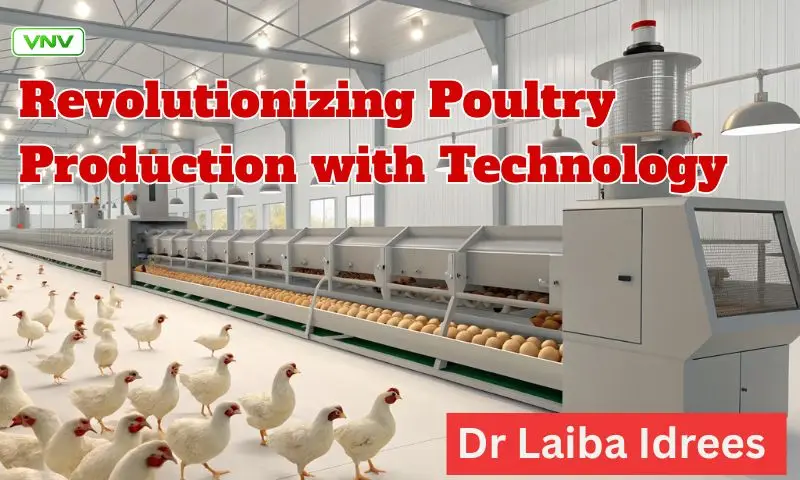
Artificial Intelligence (AI) is transforming poultry production by enhancing productivity, profitability, and sustainability. A key area of impact is health monitoring and disease detection.
AI systems connected to sensors and cameras continuously monitor the behavior of birds—including their sound and movement—which are early indicators of illness. Machine learning algorithms examine data such as decreased activity and unusual vocalizations.
Instruments like SoundTalks, previously successful in detecting respiratory diseases, are now being adapted for poultry farms by researchers at KU Leuven and the University of Milan.
Since feed cost is the largest input expense and a vital health factor, AI-powered systems are being used to optimize feed efficiency. These systems analyze feed intake and growth data to create personalized feeding schedules, ensuring optimal nutrient delivery to each bird.
Cargill has developed AI-based feed optimization tools that adapt formulation in real-time based on bird performance, significantly lowering costs and improving FCRs.
Key environmental variables like lighting, humidity, temperature, and ventilation are crucial. Companies like Connecterra are using AI tools to maintain ideal conditions, improving growth and egg production while enhancing animal well-being.
AI also supports smart breeding by analyzing genetic data and selecting birds with desirable traits like disease resistance and faster growth. Companies such as Genus and Hendrix are advancing breeding programs by processing vast genetic and performance data.
👩⚕️ Dr. Huria Shah
Expert in Livestock Nutrition & Animal Health in Pakistan

Repetitive daily tasks—like feeding, waste management, and egg collection—can be automated through robotics and AI systems, particularly on large-scale farms. For example, Poultry Bot has been developed in Europe to monitor sheds and gather data.
Finally, AI is proving essential in supply chain optimization by forecasting demand and managing delivery scheduling. Companies like IBM are building AI-powered supply platforms that help farmers make smarter production decisions.