By Mr. Javed Iqbal, Chairman – Amanat Dairy Feed
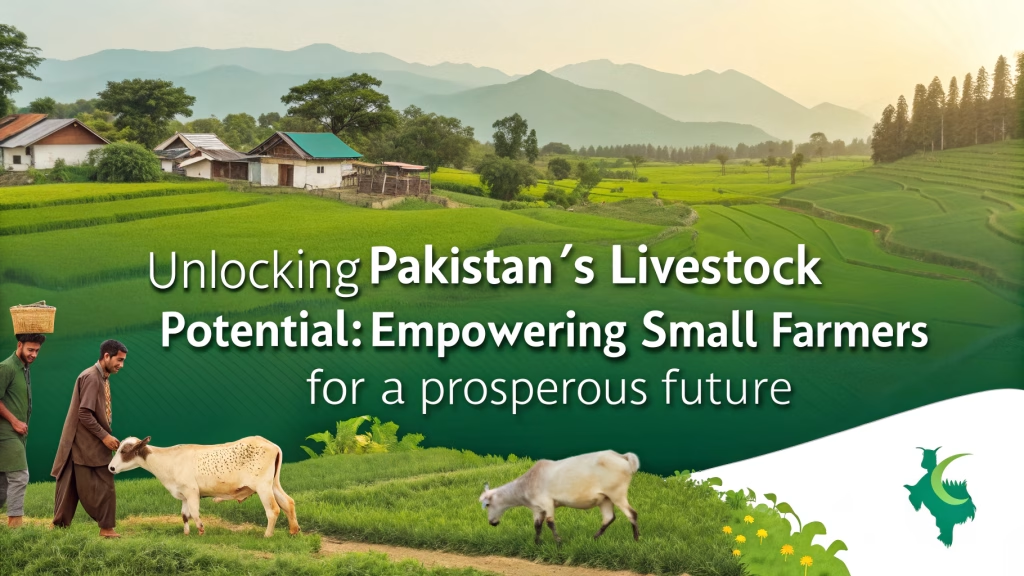
Livestock is the backbone of Pakistan’s rural economy, contributing over 60% of the agricultural GDP and nearly 11.5% of the national GDP, as reported in the “Pakistan Economic Survey 2023–24”. With more than 8 million rural households dependent on livestock, this sector plays a pivotal role in poverty alleviation, food security, and economic growth.
Yet, despite its significance, much of this potential remains untapped especially among small farmers and marginalized communities.
The Challenges Facing Small Farmers:
More than 90% of Pakistan’s livestock is reared by small-scale farmers, many of whom own just 2 to 5 animals. These farmers are the backbone of dairy and meat production, yet they often lack access to modern techniques, veterinary services, and quality feed. Outdated practices and limited knowledge result in low milk yields, poor animal health, and missed economic opportunities—not only for the farmers but for the entire nation.
Education as the Catalyst for Change:
At Amanat Dairy Feed, we believe that sustainable transformation begins with education. Simple awareness—about clean water, balanced feed, vaccination schedules, and heat stress management—can drastically improve farm productivity. By introducing modern dairy techniques and offering hands-on training, particularly in underserved areas, we aim to help farmers transition from traditional practices to professional livestock farming.
Our efforts have already yielded tangible results: in regions where we conducted training programs and free medical camps, farmers reported a 20–30% increase in milk production and a significant reduction in disease outbreaks.
Seizing Global Opportunities:
The global Halal meat market is projected to exceed $2 trillion by 2026. Pakistan, with its natural advantages, is poised to become a major player—but only if we address critical challenges such as breed improvement, traceability, hygiene standards, and disease control.
Currently, Pakistan exports meat worth over $450 million annually. This figure could grow exponentially if smallholder farmers adopt global best practices. Equipped with the right knowledge and tools, farmers in remote areas can become key contributors to this export pipeline.
Click here: A Vision for Sustainable Livestock Farming
Collaborative Efforts for Sustainable Growth:
To unlock the full potential of Pakistan’s livestock sector, a collaborative approach is essential. Government policies, private sector involvement, university partnerships, and youth engagement must all play a role. At Amanat Dairy Feed, we have launched pre internship opportunities for veterinary students, bridging the gap between academic research and on-ground realities. By involving students, nutritionists, and animal health professionals in rural education, we ensure that innovation reaches the farmers who need it most.
A Call to Action:
The future of Pakistan’s dairy and meat industries lies in the hands of its rural communities. By investing in their education, providing access to resources, and fostering partnerships, we can empower small farmers to transform not only their livelihoods but also the nation’s economy.
The time to act is now. Together, let us work alongside these farmers toward a more prosperous, sustainable, and food-secure Pakistan.