By Dr. Paio Khan Scientific officer (BPS-17)
L&DD Balochistan
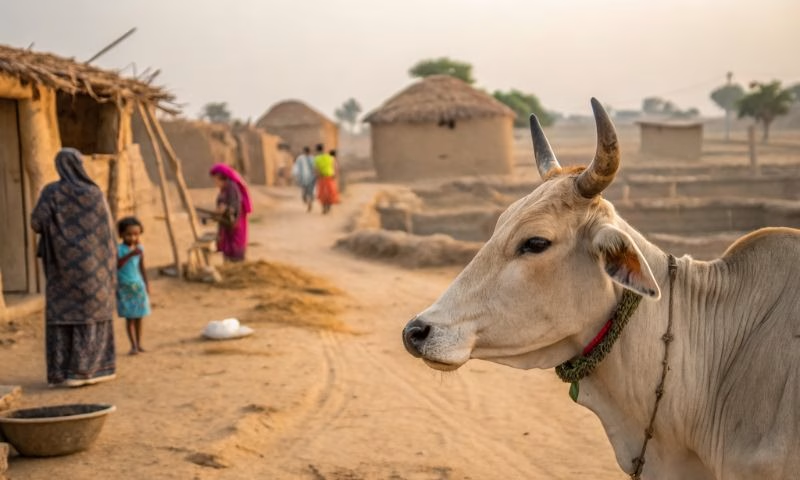
The Eid ul Adha is just round the corner, and animal movement to the livestock markets and across Baluchistan’s borders is expected to intensify. Amidst this seasonal surge in livestock activity, an invisible and deadly threat continues to loom-Crimean Congo Hemorrhagic fever (CCHF).Transmitted through ticks and direct contact with infected blood, this viral disease has silently emerged as one of the most serious yet underreported public health threats in the province.
CCHF is a viral disease, its transmission mainly occurs primarily through the bite of Hyalomma ticks or through contact with the blood and tissue of infected animals. While animals remain asymptomatic, showing no signs and symptoms, In humans, the virus causes intense fever, muscle ache, vomiting, and interior bleeding, ultimately leading to a fatality rates as high as 30–40%.

Ultravec BEF Vaccine
Active Immunization against EPHEMERAL Fever
Fight 3DAY Sickness
In Pakistan, CCHF has been a persistent challenge, but Baluchistan has been reporting the highest number of cases annually due to its unique climate, rural lifestyle, and close and frequent human to animal contact.
Baluchistan is home to large livestock population and has the longest and unregulated borders. Therefore, the province has found itself all the times at the center of attention due to recurring cases of Crimean-Congo Hemorrhagic Fever (CCHF). As the summer has approached and animal movement intensified in anticipation of Eid-ul-Adha, public health professionals and epidemiologist are sounding the alarms on the urgency for preventive measures and greater awareness to tackle this deadly zoonotic disease.
Recently, this author conducted a Knowledge, Attitude, and Practice (KAP) survey among farmers, para-veterinary workers, veterinarians, and healthcare workers across Baluchistan. The survey revealed both encouraging awareness and critical gaps. While a majority of the respondents had knowledge about CCHF, a significant number were not clear about the role of ticks and transmission routes. Many participants also reported limited access to protective gear and repellents, underscoring the need for enhanced preventive resources at the community level.
Though Baluchistan is the epicenter, The Congo fever has also been reported from other provinces including Sindh, Khyber Pakhtunkhwa, and Punjab. According to National Institute of Health (NIH) Islamabad. In 2024, there were a total of 101 cases across the country with more than 25% mortality. The NIH issues an annual advisory for CCHF annually to sensitize people, animal care providers and other stakeholders in order to further improve and strengthen the level of preparedness fort the prevention and control of CCHF.

MEVAC LSD
Now you can protect your Herd from lumpy skin disease
Promisingly, the Government of Baluchistan through Health and Livestock Department, has taken several steps in recent years to improve tick control and public outreach. The Livestock Department’s extension services are aimed at Tick surveillance, acaridae application, and coordination with health authorities. Similarly, Health department, time and again, has focused on proactive measures to prevent or mitigate the spread of this fatal disease. These efforts include community engagement, awareness campaigns and coordination with livestock department.
Click here: What Happens to Dairy Cow Fertility When Temperatures Rise?
However, due to geographical challenges, limited manpower, and the large scale of animal movement especially during peak seasons, both departments continue to face logistical constraints in implementing comprehensive vector control programs. There are capacity and budgetary issues in strengthening the disease surveillance system, training of healthcare and veterinary workers and managing quarantine centers across the borders. Cross-border animal movement from Afghanistan and Iran also adds another layer of complexity, as infected animals and ticks can bypass disease monitoring if quarantine systems are not rigorously enforced. Strengthening border surveillance and animal health certification processes will be key in minimizing transboundary disease threats.
Health experts are of the views that CCHF is not only human and animal health issue; it is a One Health issue, where the well-being of humans, animals, and the environment are closely intertwined. This approach encourages collaboration across sectors to develop integrated strategies for disease prevention and response.



As far as prevention and control is concerned, public education is the strongest weapon against CCHF. Simple measures such as using tick repellents, wearing protective clothing during animal handling, avoiding contact with sick animals, and promptly seeking medical care in case of symptoms can go a long way in reducing the risk. It is imperative for health department, livestock department, and local communities to work in tandem. Awareness campaigns, early detection mechanisms, and effective coordination between human and animal health systems can help mitigate the impact of CCHF.
Failure to act timely can turn CCHF into an annual epidemic in Baluchistan. With the right blend of science, policy, and community engagement, this silent killer can be contained. The time to act is now—before the next tick bite becomes the next outbreak.