Published: December 2025
Publisher: Industrial Experts Forums Pakistan
Author:
Dr. Usman Nazir, PhD (Postdoctoral)
College of Animal Science and Technology, Yangzhou University
Email: usmann539@gmail.com
Gosling gout is fundamentally a metabolic disorder characterized by the pathological accumulation of uric acid in the blood, a condition known as hyperuricemia, which leads to the deposition of white, chalk-like urate crystals in the internal organs (visceral gout), joints (articular gout), or both. This deposition results in inflammation, severe pain, lameness, and ultimately high mortality rates in affected flocks.
The physiological basis of this condition lies in the unique avian purine metabolism. Unlike mammals, which excrete nitrogenous waste primarily as urea, birds excrete nitrogen mainly as uric acid. While this mechanism is highly efficient in conserving water, it places a considerable burden on the renal system, making the kidneys a critical point of vulnerability.
The primary cause of gosling gout is a disruption in the balance between uric acid production and excretion, a process heavily dependent on proper kidney function. When this balance is disturbed—either through excessive uric acid production or, more critically, reduced excretion—the saturation threshold of uric acid in the blood is exceeded. This leads to precipitation of insoluble urate salts and crystal deposition.
Several interlinked factors contribute to this condition:
Dietary imbalances, particularly feeds excessively high in crude protein and calcium, are major contributors. Crude protein levels exceeding 20% in starter diets are frequently implicated, as excessive amino acid catabolism produces surplus ammonia that is converted into uric acid.
Imbalanced calcium-to-phosphorus ratios, especially excessive calcium, can cause renal calculi formation and tubular damage, obstructing urine flow and trapping uric acid.
Renal damage caused by nephrotoxic agents, especially mycotoxins such as ochratoxin and aflatoxin, which destroy epithelial cells of the proximal convoluted tubules—the primary site of uric acid secretion.
Dehydration, resulting from inadequate water access, poor water quality, or enteric diseases, concentrates uric acid in the bloodstream and renal tubules, facilitating crystallization.
Viral infections, particularly goose astroviruses, have emerged as major etiological agents. These viruses directly infect renal tubular cells, triggering severe visceral gout. Mortality in such outbreaks can reach 50% or higher in susceptible gosling flocks.
Treatment and Management
Management of gosling gout requires a rapid, multi-pronged approach targeting both immediate clinical signs and underlying causes.
- Dietary correction
- Reduce crude protein levels to below 18% for goslings
- Maintain an optimal calcium-to-phosphorus ratio of approximately 2:1
- Renal support and uric acid solubility enhancement
- Administration of alkalizing agents such as sodium bicarbonate (0.5–1% in drinking water) or potassium citrate to increase urinary pH and enhance uric acid excretion
- Water management
- Continuous supply of clean, fresh, and easily accessible water to ensure hydration and renal flushing
- Biosecurity and disease control
- Isolation of affected birds
- Strict biosecurity measures to prevent horizontal transmission, especially in suspected viral outbreaks
While pharmaceutical agents such as allopurinol (uricostatic drugs) are under research, they are not routinely used in commercial production due to regulatory and economic constraints. Therefore, prevention remains the cornerstone of control.
Preventive Strategies
- Use high-quality, mycotoxin-free feed, with routine laboratory testing, particularly during humid seasons
- Implement robust water sanitation protocols, including regular flushing and cleaning of water lines to prevent biofilm formation
- Avoid unnecessary or prolonged use of nephrotoxic drugs (e.g., aminoglycosides, sulfonamides); if unavoidable, ensure enhanced hydration support
- Maintain optimal breeder flock health, nutrition, and vaccination programs to ensure strong maternal immunity and reduce vertically transmitted infections
Prevalence and Economic Impact in China
Although precise nationwide incidence data are not publicly available, gosling gout is recognized as a significant and persistent problem in China’s waterfowl industry—the largest in the world. Academic literature and extension advisories frequently identify gosling gout as a major productivity constraint.
- Incidence varies by region, season, management quality, and biosecurity levels
- More common in small to medium-scale farms with poor dietary control and environmental stress
- Shows seasonal peaks in summer, associated with heat stress, dehydration, and feed spoilage
- Economic losses stem from:
- High mortality
- Stunted growth in survivors
- Carcass condemnation due to visceral urate deposits
- Increased treatment and prevention costs
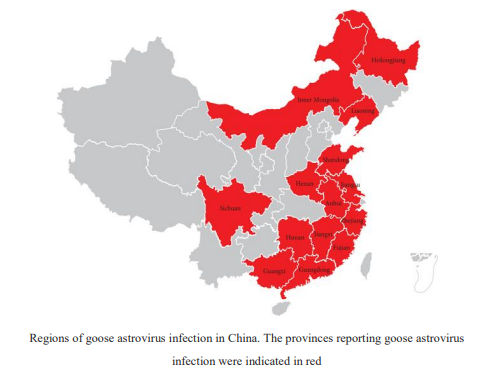
These challenges have driven ongoing research in China focusing on nephropathic viral vaccines, improved dietary formulations, genetic resistance markers, and enhanced farmer education through agricultural extension services.
The fight against gosling gout illustrates the complex interaction between nutrition, renal physiology, virology, and farm management, underscoring the need for an integrated preventive approach to protect flock health and ensure sustainability of the goose industry.