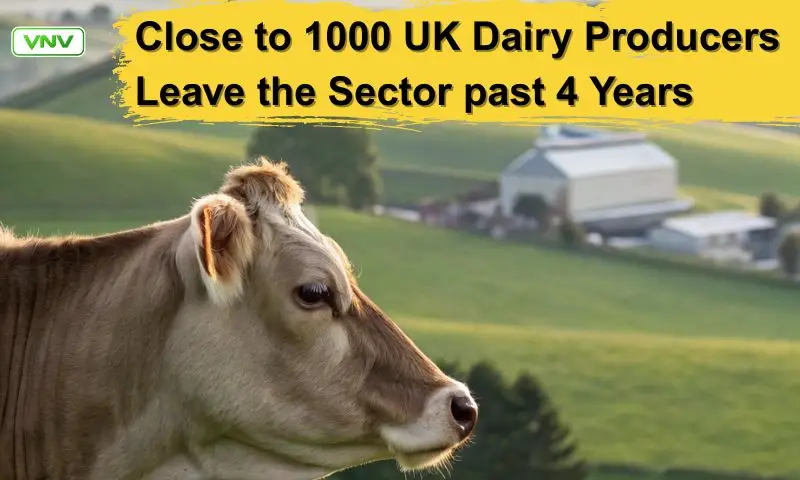
The ongoing decline in the number of dairy farmers in Great Britain remains a concern, with the total number of producers dropping to just 7,040 by April 2025, as per the latest AHDB milk buyer survey.
This marks a 2.6% decrease from the previous year, meaning 190 farmers exited the industry over the past 12 months.
A significant portion of this drop occurred during the winter, with 160 fewer active farms since October.
This decline comes even though farmgate milk prices have remained relatively stable throughout the year.
According to Annabel Twinberrow, a livestock analyst at AHDB, “This pattern has continued over time, with many farmers choosing to leave the sector before the winter, when costs for housing and inputs like feed typically rise.”
She added that the 2024 winter also brought changes in government support and new supply chain demands for some farmers.
Alarmingly, around 1,000 dairy producers have exited the industry in the past four years.
At the same time, the sector is consolidating, as shown by a continued rise in the average milk output per farm, now estimated at 1.77 million litres annually.
Despite fewer farms, overall milk production paints a different picture—reaching record levels last month with a more than 5% increase compared to May 2024.
Ms Twinberrow further noted: “Our projection for the 2025–26 milk year anticipates a new record of 12.83 billion litres, which is 3.1% higher than the previous year.”
According to the Dairy Group, milk output in the UK and Ireland has been stronger in 2025, while key European countries—Germany, France, the Netherlands, and Belgium—have experienced declines.
Nick Holt-Martyn, principal consultant at the Dairy Group, said: “In 2025, UK milk production peaked on 4 May—eight days earlier than in 2024—and was up 4.9%. Even with drought concerns affecting grazing, production remained robust, with a 5.7% increase in the rolling seven-day average by late May.”