Prof. (R) Dr. Ghulam Muhammad, Mughees Aizaz Alvi, Muzafar Ghafoor, Muhammad Saqib, Rai Bahadur Kharl
Department of Clinical Medicine and Surgery, University of Agriculture, Faisalabad, Pakistan
Corresponding author: mugheesaizazalvi@gmail.com
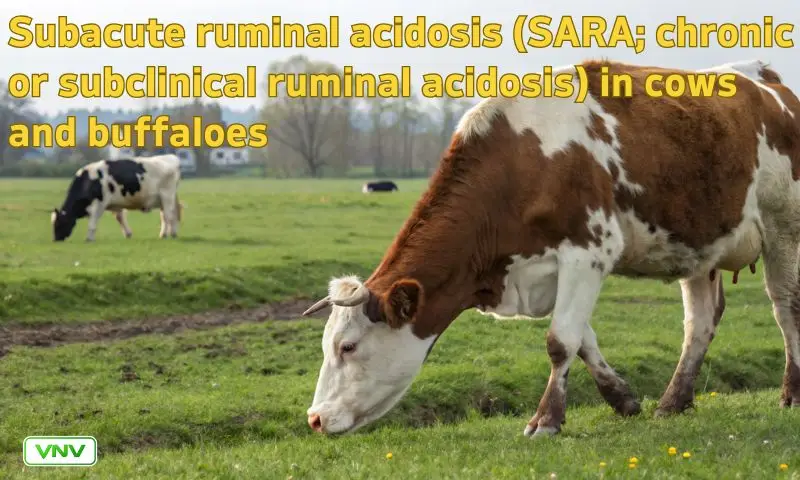
Feeding of diets high in starch (energy) and low in fiber is a norm in modern-day dairy farming to increase milk production by these diets etc. increase of risk of subacute ruminal acidosis. Subacute ruminal acidosis (SARA) refers to prolonged periods of moderately low ruminal pH due to accumulation of high levels of volatile fatty acids (propionic acid, acetic acid and butyric acid) and insufficient rumen buffering due to suboptimal production of saliva (Plaizier et al., 2008).
Technically speaking, SARA refers to an intermittent drop of ruminal pH below 5.6 for more than 180 minutes/day or below 5.8 for more than 330 minutes/day (Hartinger et al., 2024). Normal pH of rumen is 6.5-7.0. Different values of rumen pH have been used by different workers to define SARA (Plaizier et al., 2008). Sometimes, rumen pH values between 5.5. and 5.8 are used to define SARA
The rationale behind using these high ruminal pH values is that most of the ruminal cellulolytic microorganisms fail to multiply when rumen pH is below 6 (Hossain, 2020). Causes of SARA include (Plaizier et al., 2008; Hossain, 2020; Akil and Meena, 2023): (a) Feeding of rations containing very high quantity of easily fermentable carbohydrates (e.g. grains, fermentation of which produces acids that can lead to reduction in ruminal pH) and very low quantity of forages with low peNDF (physically effective neutral detergent fiber) contents, (b) making a too quick change in the ration from high forage + low concentrate feed to high concentrate + low forage feed (a rapid change in the feed does not allow ruminal flora, ruminal wall and ruminal papillae to adjust to the new type of feed), (c) insuficcient buffering of acids in the rumen due to insufficient chewing and thus low production of saliva when the forage contents of feed are low, and (d) a preferential sorting of medium-sized forage and concentrate particles and rejection of longer forage and smaller grain particles from TMR (total mixed ration) resulting in reduced intake of much needed peNDF for optimal production of saliva and ruminal functions.
The decrease in pH of rumen in SARA is due to accumulation of volatile fatty acids and not due to accumulation of lactic acid (Krause and Oetzel, 2006; Abdela, 2016). Daily episodes of fall in ruminal pH over a long period of time cause a decrease in fiber digestion, fall in milk yield and fall in milk fat. SARA is a serious and common health problem of high producing dairy animals. Chaudhry et al. (2019) reported a SARA prevalence of 16.32% in cows and buffaloes of district Okara (Pakistan) and 10.78% of district Lahore. The main time window of occurrence of SARA is from calving to about 5 months post-calving and it affects high yielding animals (Krause and Oetzel, 2006).
First-lactation cows are more likely to suffer from SARA than multiparous cows (Hartinger et al., 2024). SARA predisposes the animals to systemic inflammatory conditions, laminitis, bloat, polioencephalomalacia (cerebrocortical necrosis), mastitis, rumen parakeratosis, abomasal displacement, abomasal ulcers, diarrhea, loss of body condition, infertility, uterine infections, formation of abcesses, dysfunction of liver and fall in milk fat (Enemark, 2008; Akil and Meena, 2023; Hartinger et al., 2024). Inflammation in the body organs and several other signs of SARA are the results of translocation of bacterial lipopolysaccharide (endotoxin) from the rumen into the blood (Plaizier et al., 2012).
SARA affected animals do not show any specific sign. However, accumulation of volatile fatty acids leads to inflammation of different organs and tissues. Ruminitis due to accumulation of volatile fatty acids leads to colonization of rumen papillae by bacteria. These bacteria may enter blood through portal circulation and get disseminated to liver where they cause liver abscesses often leading to peritonitis.
Colonization may also occur in heart, lungs, kidneys and joints leading to chronic endocarditis, pneumonia, pyelonephritis and arthritis often detected on postmortem examination or slaughter (Abdela, 2016). It is important to reiterate that signs of SARA are not specific, appear several weeks after multiple episodes of ruminal acidosis (Tajik and Nazifi, 2011) and include decrease in feed intake or erratic feed intake, laminitis (aseptic inflammation of dermal layers of hoof characterized by discoloration of the hoof, hemorrhages or ulcers in the sole and misshapen hooves), eating of hay with preference over concentrate, silage and green fodder, slightly loose frothy feces with fibrin casts and undigested grains, dropping of cud, decreased milk fat percentage, high culling rate, high rate of inexplicable deaths, loss of body condition and poor reproductive performance etc.
Some SARA affected animals may develop caudal vena cava syndrome characterized clinically by hemoptysis (coughing of blood that has originated from lungs) and fatal pulmonary hemorrhage. The underlying cause of pulmonary hemorrhage is appearance of foci of pulmonary infection due to septic emboli from liver abscesses. Pulmonary infection causes rupture of pulmonary blood vessels (Krause and Oetzel, 2006).
Diagnosis of SARA is difficult because signs are non-specific and SARA-associated health problems appear weeks after consumption of putative feed (Humer et al., 2018). Diagnosis is based on:
A) Clinical signs
· Fluctuating cycling feeding pattern has been described as the most consistent sign (Humer et al., 2018). In cyclic feed intake, the SARA affected animal will eat some ration and then rufuse further feed intake due to low rumen pH and elevated osmolarity of rumen contents. Appetite returns when the normal conditions of the rumen are restored (Enemark, 2008). SARA affected cows show an altered feed sorting behavior. They often prefer to eat hay and forage and refuse to eat concentrate. They do so to attenuate this rumen fermentation disorder (Humer et al., 2018).
· In healthy cattle, rumen contracts 5-7 times in 5 minutes. Rumination lasts for about 40-50 minutes 7-8 times a day (BROLIS Herdline Acidosis in cows: causes, symptoms, treatment an prevention;
About 40% of all cows in a herd indulge in
rumination at any given point of time. In SARA affected animals, these values
are deranged and there is decrease in feed intake and chewing (Humer et al.,
2018).
· Chronic laminitis (lameness) in more than 10 % of animals is indicative of SARA problem in the herd (Krause and Oetzel, 2006; Tajik and Nazifi, 2011; Abdela, 2016).
· Diarrhea with light yellow, sweet-sour smelling frothy feces containing gas bubbles fibrin casts and more than normal quantity of undigested grains and longer than normal fiber particles (Enemark, 2008). The cause of the diarrhea is fermentation of bypassed starch and other feed components in the hindgut which produces volatile fatty acids and CO2. Volatile fatty acids are absorbed but CO2 produces a frothy appearance of feces (Hossain, 2020).
· Caudal vena cava thrombosis characterized clinically by appearance of frothy blood around muzzle and both nostrils (epistaxis), respiratory difficulty, black tarry feces and death.
B) Determination of ruminal pH: Determination of ruminal pH by probe or rumenocentesis is the most accurate method for the diagnosis of SARA. Samples of rumen fluid by rumenocentesis should be collected 4-8 hours after feeding of TMR and 2-4 hours after feeding when concentrate is fed separately (Humer et al., 2018). Prevalecnce of SARA in a herd is considered high when at least 3 of 12 randomly selected dairy cows have a rumen pH ≤ 5.5 (Humer et al., 2018).
C) Integrated information collected by farm visit, analysis of disease records of the farm and analysis of feed structure and composition particularly in terms of peNDF, starch contents and feed particles size etc.
D) Determination of changes in the composition of milk: BROLIS Herdline is a commercially available milk analyzer that can help diagnose ruminal acidosis by detecting changes in proteins, fat and other components of milk (Antanaitis et al., 2024). It is installed in the milkline of the milking machine. Ruminal acidosis causes a decrease in the milk yield and changes in the concentration of its constituents.
Disturbance of ruminal functions causes a decrease in the number of fiber-degrading bacteria leading to less production of acetate in the rumen which is required for the synthesis of milk fat. A decrease in the milk fat level from 4.2% to 3.0-3.3% is a strong surrogate indicator of SARA. Similarly, an optimal ratio of milk fat to milk protein in dairy cows is approximately 1.2. SARA is suspected when this ratio is 1.1-09. In acute ruminal acidosis, this ratio is less than 0.9.
E) Determination of bacterial endotoxin levels in blood and feces: SARA causes increase in the level of bacterial LPS (endotoxin) in blood and feces (Plaizier et al., 2012; Akil and Meena, 2023) which can be used for the diagnosis of this problem.
F) Postmortem findings: More than 30% of culled dairy cows when slaughtered may show circumscribed focal points of bacterial infection (microabscesses) in the parenchyma of liver. These abscesses are almost always caused by Fusobacterium necrophorum which is translocated from the acid damaged rumen via portal circulation to liver (Hossain, 2020). Bacteria translocated from rumen may also colonize in heart, lungs, kidneys and joints leading to chronic endocarditis, pneumonia, pyelonephritis and arthritis which are often detected on postmortem examination or slaughter (Abdela, 2016). Postmortem findings of other SARA-induced disorders vary according to their nature.
Rx
a) Add monensin (e.g. Rumensin® 20% Powder, Elanco Animal Health, New Zealand, marketed in Pakistan by ICI; monensin is an ionophoric antibiotic widely used to prevent coccidiosis and for increasing the production of propionic acid) to the feed @ 300 mg monensin per adult cow or buffalo continuously (Ahuja et al., 1990). This is equivalent to feeding 1.5 grams of Rumensin® 20% per adult cow or buffalo daily.
b) Formulate the dairy feed in such a way that it contains 25-30% NDF on dry matter basis and 19% of this should come from roughages to maintain the health and function of the rumen (National Research Council, 2001). Feed the high producing dairy cows on a diet with 19-22% physically effective NDF (peNDF) and feed particle size greater than 1.18 mm or 18.5% effective NDF with feed particle size greater than 8 mm (Jaramillo-López et al., 2017).
Roughage fiber length of 5-10 cm is recommended for cattle. In simple words, increase the proportion of fodder in the feed or feed the animals on long chopped forage. Large forage particles stimulate rumination and promote secretion of saliva which buffers acidity in the rumen because saliva is rich in bicarbonate.
c) Add sodium bicarbonate as a buffer to the feed @ 150 grams per adult cow per day continuously (Hossain, 2020). Also provide sodium bicarbonate or another antacid as free choice when lactating animals are on a high-grain ration.
d) Supplement the grain-based feed with high doses of vitamin E which prevents the harmful effects of ruminal acidosis by its anti-oxidant action (Jaramillo-López et al., 2017). For lactating cows, NRC recommends 15 IU of vitamin E supplementation/kg dry matter of feed.
Add a mixture of cinnamaldehyde (a flavonoid that gives cinnamon its flavor and odor) @ 0.18 grams/day per cow and eugenol (the major constituent of the aromatic oil extract of cloves) @ 0.09 grams/day per cow to the feed (Jaramillo-López et al., 2017).
e) Add a live yeast preparation (e.g. Actisaf® SC HR+ Powder, Hilton Pharma, Pakistan; contains live yeast, Saccharomyces cerevisiae; dose for a cow/buffalo is 5-10 grams per day continuously) to the feed (Hossain, 2020) to control accumulation of lactate and to stimulate the production of propionate.
f) Perform steaming up over a 4-5 weeks duration during the close up period to allow adaptation of ruminal flora to high energy diet. Increase the amount of concentrate @ 0.25 kg /day during steaming up process (Enemark, 2008).
g) To address the problem of low rumen pH due to feeding of diet with high DCAD (dietary cation-anion difference), add buffer to the feed and stimulate chewing and rumination activity for increased rminal buffer capacity (i.e. increased salivation) by dietary management (7% fiber particles >3.5 cm; 27-30% NDF with 70-80% coming from forage to ensure adequate peNDF; 35-45% of dry matter as nonfibrous carbohydrate; Enemark, 2008).
h) Switch the animals gradually (i.e. over a period of 2-3 weeks) from forage to concentrate-based diet to allow ruminal flora to adapt to grain-based diet, ruminal epithelium to modify itself to be more absorptive and ruminal homeostasis to be established and maintained (Jaramillo-López et al., 2017).
i) Pay proper attention to feed bunk management and comfort of the animals. Provide proper bunk space. House the animal in stalls having proper length and width so that lactating cows can ruminate for about 12 to 14 hours per day (Hossain, 2020).
j) If availaible, give IM injection of Streptococcus bovis (the principal microorganism involved in ruminal acidosis) vaccine twice at an interval of 28 days (Jaramillo-López et al., 2017).
k) Treat SARA-induced health disorders (e.g. laminitis, diarrhea, infertility etc.) as per their nature.
Notes:
1) The effect of feed supplementation of yeast on the pH of rumen appears about one week after the intiation of supplementation. Supplementation of feed with yeast reduces the incidence of SARA but may not be effective on acute ruminal acidosis (Jaramillo-López et al., 2017).
2) NDF (Neutral detergent fiber) refers to total insoluble fiber in the diet. It includes cellulose, lignin and hemicellulose and is a better indicator of total fiber contents of the feed than ADF.
3) ADF (Acid detergent fiber) is a sub-fraction of NDF composed of cellulose, lignin, a tiny amount of silica and minerals. It measures the indigestible portion of plant; the higher the ADF, the lower the digestibility. In other words, plants with high ADF are low in energy.
4) Physically effective neutral detergent fiber (peNDF) refers to fraction of NDF that stimulates chewing activity and contributes to the floating mat of large feed particles in the rumen (White et al., 2017).
5) Severe cases of SARA should be treated by following the line of treatment usually recommended for the treatment of acute ruminal acidosis (Akil and Meena, 2023). This includes (a) IV administration of 5 liters of 5% sodium bicarbonate solution for an adult cow or buffalo followed by IV administration of a balanced salt solution (e.g. Ringer’s solution up to 60 liters for an adult cow or buffalo) over the next 6-12 hours or isotonic sodium bicarbonate solution (1.3%; Kumar et al., 2018) plus normal saline. Treatment may be repeated daily with reduced doses of fluid for 3-5 days.
The use of Ringer’s lactate is contraindicated (RAGFAR, 2007) because in acute ruminal acidosis, the concentration of lactate is already high. (b) IM administration of procain penicillin (@ 22000 units/kg b.wt.) daily for 5 days to reduce the chances of bacterial rumenitis and live abscesses. (c) IM administration of thiamine (@ 10 mg/kg b.w.t.) daily for 3-5 days (RAGFAR, 2007).
Modified from:
Abdela, N., 2016. Sub-acute ruminal acidosis (SARA) and its consequence in dairy cattle: a review of past and recent research at global perspective. Achievements in the Life Sci., 10(2): 187-196.
Ahuja, A. K., S. S. Randhawa, and S. S. Rathor, 1990. Effect of monensin in ameliorating subacute lactic acidosis in buffalo calves. Acta Vet. Brno., 59:171-178.
Akil, M., and N. S. Meena, 2023. The ultimate guide to SARA diagnosis and care: a review. Bhartiya Krishi Annusandham Patrika. 38(4):356-359.
Antanaitis, R., K. Dzermeikaite, J. Kristolaityte, R. Stankevicius, G. Daunoras, M. Televicius, D. Malasauskiene, J. Cook, and L. Viora, 2024. Changes in parameters registered by innovative technologies in cows with subclinical acidosis. Animals (Basel). 14(13):1883. https://doi.org/10.3390/ani14131883.
Chaudhry, A. S., M. H. Saleem, M. A. Khan, M. S. Khan, K. Ashraf, I. Ahmad, and K. Hameed, 2019. Risk factors assessment of subacute ruminal acidosis in cattle and buffaloes in selected districts of Punjab, Pakistan. J. Anim. Plant Sci., 29(2): 448-452.
Enemark, J. M. D., 2008. The monitoring, prevention and treatment of sub-acute ruminal acidosis (SARA); a review. The Vet. J., 176(1):32-43.
Hartinger, T., E. Castillo-Lopez, N. Reisinger, and Q. Zebeli, 2024. Elucidating the factors and consequences of the severity of rumen acidosis in first-lactation Holstein cows during transition and early lactation. J. Anim. Sci., 102:1-15.
Hossain, E., 2020. Sub-acute ruminal acidosis in dairy cows: its causes, consequences and prevention measures. Online J. Anim. Feed Res., 10(1):302-312.
Humer, E., J. R. Aschenbach, V. Neubaur, I. Kröger, R. Khiaosa-ard, W. Baumgartber, and Q. Zebeli, 2018. Signals for identifying cows at risk of subacute ruminal acidosis in dairy veterinary practice. J. Anim. Physiol. Anim. Nutri. (Berl): 102(2):380-392.
Jaramillo-Lóopez, E., M. F. Itza-Ortiz, G. Peraza-Mercado, and J. M. Carrera-Châvez, 2017. Ruminal acidosis: strategies for its control. Austral. J. Vet. Sci., 49(3):139-148.
Krause, K. M., and G. R. Oetzel, 2006. Understanding and preventing subacute ruminal acidosis in dairy herds: a review. Anim. Feed Sci. Technol., 126: 215-236.
Kumar, P., G. Charaya, N. Sindhu, T. Kumar, and Y. S. Rana, 2018. A report on clinical diagnosis and management of grain engorgement in a buffalo. Indian J. Vet. Med., 38(1&2): 113-114.
National Research Council, 2001. Nutrient Requirements of Dairy Cattle. 7th Ed. National Academy Press, Washington, DC, USA.
Plaizier, J.C., D.O. Krause, G.N. Gozho, and B.W. McBride, 2008. Subacute ruminal acidosis in dairy cows: The physiological causes, incidence and consequences. The Vet. J., 176(1):21-31.
Plaizier, J.C., E. Khafipour, S. Li, G. N. Gozho, and D. O. Krause, 2012. Subacute ruminal acidosis (SARA), endotoxins and health consequences. Anim. Feed Sci. Technol., 172(1-2):9-21.
RAGFAR, 2007. Ruminal acidosis – aetiopathogenesis, prevention and treatment. Reference Advisory Group on Fermentative Acidosis of Ruminants ( RAGFAR), Australia. pp: 1-55.
Tajik, J., and S. Nazifi, 2011. Diagnosis of subacute ruminal acidosis: a review. Asian J. Anim. Sci., 5: 80-90.
White, R. R., M. B. Hall, J. L. Firkins, P. J. Kononff, 2017. Physically adjusted neutral detergent fiber system for lactating dairy cow rations. I: Deriving equations that identify factors that influence effectiveness of fiber. J. Dairy Sci., 100:9551-9568.