Khubaib Ahmed
Thank you for reading this post, don't forget to subscribe!CEO – Khubaib’s Consultancy Services
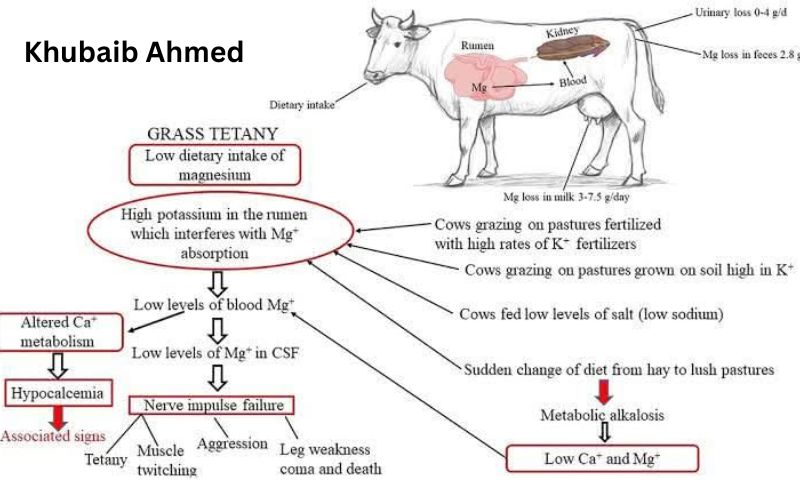
In Pakistan, the hot and humid summer season brings various challenges for dairy farmers. One of the lesser-known yet critical issues is the excess intake of potassium through certain summer grasses. This imbalance in the diet can lead to muscle shivering, seizures, nervousness, and even death in cattle and buffaloes if not managed properly.
Grasses with High Potassium in Pakistani Summers.
During summer, many grasses grow quickly and contain naturally high levels of potassium. Some of the most commonly used green fodders that can cause this issue include:
-
Sorghum (Jowar) -
Sudan Grass -
Bajra (Pearl Millet) -
Maize (Corn Fodder) -
Lucerne (Alfalfa) – when over-fertilized -
Barseem – in late cutting or fertilized too much -
Napier Grass (Elephant Grass)
These grasses, especially when harvested young or after nitrogen and potassium-rich fertilization, tend to absorb and store higher potassium content.
Symptoms in Dairy Animals
Excess potassium disturbs the calcium and magnesium balance, leading to:
-
Shivering and tremors. -
Muscle twitching. -
Seizures (fits). -
Unstable walking. -
Reduced milk yield.
Sudden death in severe cases
This condition is similar to grass tetany or hypomagnesemia, which is due to magnesium deficiency caused by excessive potassium intake.
How to Prevent and Control This Problem.
Khubaib’s Consultancy Services recommends the following measures to protect your animals during summer:
1. Balanced Fodder Rotation
Mix high potassium fodder with low potassium sources like:
-
Straw -
Dry fodder (wheat or rice straw) -
Tree leaves (such as Ber or Kikar)
Avoid feeding fresh, immature, or over-fertilized green fodder alone.
2. Provide Mineral Mixtures
Use Magnesium-rich mineral mixtures daily. Ensure calcium, phosphorus, and trace minerals are included.
Add Magnesium Sulphate (Epsom Salt) to drinking water (10g per adult animal) during high-risk periods.
3. Avoid Over-Fertilization
Do not use excessive DAP (Diammonium phosphate) or potassium-based fertilizers.
Let fodder grow to mature stage before cutting.
4. Provide Shade and Cooling
Heat stress worsens electrolyte imbalances.
Always provide shade, cool water, and avoid feeding during peak heat hours (12–4 pm).
5. Monitor Animal Behavior
Keep watch for early signs of shivering or strange movements.
Isolate and treat affected animals immediately under veterinary supervision.
Expert Advice by Khubaib’s Consultancy Services
With years of experience across Pakistan’s dairy sector, Khubaib’s Consultancy Services offers farm visits, nutrition plans, animal health workshops, and emergency support to dairy farmers.
We aim to:
-
Prevent seasonal animal losses -
Maximize milk productivity -
Educate farmers for modern, safe dairy practices
📞 For professional help, reach out us.
📍 Serving dairy farmers across the world