Mahrukh Babar
Department of Pharmacy, Abasyn University, Islamabad, Pakistan
Corresponding author: mahrukh.babar@abasynisb.edu.pk
Abstract:
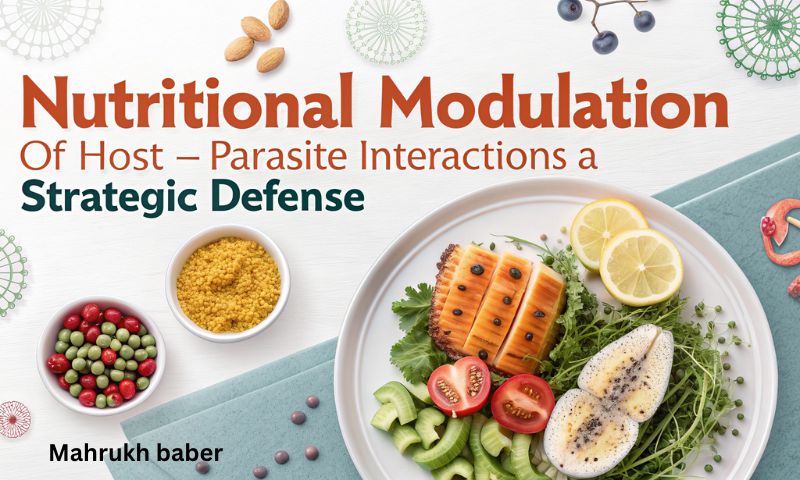
Nutritional deficiencies both in children and adults can hamper not only the growth and cognitive development but also weakens the immune system to prepare and fight for certain parasitic infections. Therefore, to combat these diseases, we not only need to boost our immunity but also keep up with our healthy nutritional requirements to reduce the economic burden of such infections as nutrition is not just about survival but also about strategic defense against certain parasitic infections.
Keywords:
Parasites, Nutrition, Infection
Introduction:
Nutrients specifically micronutrients are required by body throughout the life, especially during developmental stages of adolescence and childhood (1). Some common micronutrients serve as chemical modulators of various biological reactions and include zinc, selenium and iron (2). Around 1/3rd of world’s population suffer from micronutrients deficiency which is also exacerbated by certain parasitic infections such as malaria, leishmaniasis and helminthiasis (3).
Around 3.5 billion people are affected globally by parasitic infections where these infections cause issues like diarrhea, general weakness and also affect their physical development and growth (4). These infections and nutrients are well related in a vicious cycle where parasitic infections impair nutrient absorption whereas poor nutrition weakens the immune system and hence one exacerbate the other (5).
How Nutrients Shape Immune Responses Against Parasites:
Adequate intake of proteins supports the immune cells formation and activation (6). Also, zinc plays an important role in maintaining integrity of mucosal membranes and certain evidences suggests higher zinc amounts in body can provide resistance against certain diseases (7). Similarly, selenium is vitamin E dependent immunostimulant in poultry and ruminants and neutralizes free radicals. Both are able to decrease mortality often caused by infectious diseases (8). Another nutrient chromium helps in reduction of cortisol levels in the body.
The silent impact of circadian rhythms on drug absorption and efficacy
Mahrukh baber
Cortisol is a glucocortecoid which suppresses immunity (9). Carotenoids, included β-carotene, cryptoxanthin, canthaxanthin, lycopene have immunostimulant effect not only by quenching of free radicals but also stimulate lymphocytes, macrophages and natural killer cells. Vitamin B6 maintains a balance between humoral and cell-mediated immunity (10). This relationship between host defense and nutrition is very fragile and needs proper balance to mediate the immunity.
The Role of Malnutrition in Parasite Pathogenesis:
Malnutrition alters gut micro-biota and creates a niche for parasitic infection. For instance, during intestinal inflammation and Th2 mediated immunity, guts are malnourished and this is where helminthes thrive (11). In children, chronic malnutrition can lead to stunting-infection axis formation as repeated infections and low nutrients in the body synergistically hampers the growth and cognitive development.
Giardia lamblia also exacerbates malnutrition and weakens the immune system further (12). Similarly, different parasites have different effects on the host and nutrition. Hookworms feed on blood and causes anemia. Tapeworms feed on host nutrients and drains energy of the body (13). Parasitic infections can also induce anorexia and catabolism leading to increased energy demands when body is already running on low nutrition (14).
Strategic defense against parasitic infections:
With rising concerns about drug resistance in parasites and the limited pipeline of new antiparasitic agents, host-directed strategies are gaining traction in public health research. Nutritional load of parasitic infections can be reduced by combining traditional treatment approaches with nutritional supplementation. Integrating deworming with nutritional supplementation has shown strong evidences of improvement.
Moreover, personalized medicines and nutrition can optimize host response to the parasitic infections. If nutritional requirements are tailored according to genetics, personal requirements and immunological profiles, high risk patients can be identified and treated on priority basis. Especially in endemic regions, if basic nutrition is strengthened, cycle of infection and undernourishment can be broken, which is a cost-effective option.
Conclusion:
Nutrition holds untapped potential against parasitic infections. As global health community continues to reduce the burden of parasitic infections, integrating food in public health and clinical strategies is need of the hour and can help battle against these parasitic infections and can also reduce economical health burden. Nutrition is not just about survival but also about strategic defense against certain parasitic infections.
References:
1. Hong, S. (2025). Essential micronutrients in children and adolescents with a focus on growth and development: a narrative review. Journal of Yeungnam Medical Science, 42.
2. Elmadfa, I., & Meyer, A. L. (2019). The role of the status of selected micronutrients in shaping the immune function. Endocrine, Metabolic & Immune Disorders-Drug Targets (Formerly Current Drug Targets-Immune, Endocrine & Metabolic Disorders), 19, 1100-1115.
3. Mikail, H. G. (2011). From Nutrition to Health: The Role of Natural Products–A Review. Phytochemicals: Bioactivities and Impact on Health. Dec 22, 201.
4. Chifunda, K., & Kelly, P. (2019). Parasitic infections of the gut in children. Paediatrics and international child health, 39, 65-72.
5. Fekete, S. G., & Kellems, R. O. (2007). Interrelationship of feeding with immunity and parasitic infection: a review. Veterinarni Medicina-PRAHA-, 52, 131.
6. Wan, J. M. F., Haw, M. P., & Blackburn, G. L. (1989). Nutrition, immune function, and inflammation: an overview. Proceedings of the Nutrition Society, 48, 315-335.
7. Stiles, L. I., Ferrao, K., & Mehta, K. J. (2024). Role of zinc in health and disease. Clinical and Experimental Medicine, 24, 38.
8. Zarczynska, K., Sobiech, P., Radwinska, J., & Rekawek, W. (2013). Effects of selenium on animal health. Journal of Elementology, 18.
9. Stachowicz, M., & Lebiedzińska, A. (2016). The effect of diet components on the level of cortisol. European Food Research and Technology, 242, 2001-2009.
10. Mishra, S. B., Singh, A. K., Singh, S., & Sharma, D. R. (2024). Consumption of Carotenoidrich vegetables and functions of human T-lymphocytes. In Immune-Boosting Nutraceuticals for Better Human Health (pp. 47-80). Apple Academic Press.
11. Glendinning, L., Nausch, N., Free, A., Taylor, D. W., & Mutapi, F. (2014). The microbiota and helminths: sharing the same niche in the human host. Parasitology, 141, 1255-1271.
12. Gutiérrez, L., & Bartelt, L. (2024). Current understanding of giardia lamblia and pathogenesis of stunting and cognitive deficits in children from low-and middle-income countries. Current tropical medicine reports, 11, 28-39.
13. Hailu, F. A., Tafesse, G., & Hailu, T. A. (2020). Pathophysiology and gastrointestinal impacts of parasitic helminths in human beings. Journal of Pathology Research Reviews and Reports. SRC/JPR-125, 3.
14. Solomons, N. W. (1993). Pathways to the impairment of human nutritional status by gastrointestinal pathogens. Parasitology, 107, S19-S35.