H. Masood1, A. S. R. Duarte2, A. Akbar3, S. H. Abbas1, M. Badshah1, A. A. Shah1 and S. Khan1*
Thank you for reading this post, don't forget to subscribe!1Department of Microbiology, Faculty of Biological Sciences, Quaid-i-Azam University, 45320-Islamabad, Pakistan
2Research Group for Foodborne Pathogens and Epidemiology, National Food Institute, Technical University of Denmark, Copenhagen, Denmark
3Centre for Biotechnology and Microbiology, University of Swat, Khyber Pakhtun Khwa Pakistan
*Corresponding author’s E-mail: samikhan@qau.edu.pk,
ABSTRACT
Pakistan’s agriculture sector contributing 14.63% to the GDP in 2024 is majorly supported by the poultry industry, with a population of more than one billion broiler chickens. This research was conducted, in which data was collected from March 2022 to December 2023 through a structured questionnaire and analyzed by using univariate and multivariate methods, including multiple correspondence analyses (MCA) and cluster dendrogram. This study identified enteritis (38.46%), bronchitis (19.23%) and Newcastle disease (15.38%) as the most prevalent diseases.
The antibiotic colistin, which is considered as the last resort antibiotic, was found most frequently used in (76.92%) followed by quinolones (65.38%), amoxicillin (53.84%), macrolides (34.61%), and aminoglycosides (30.76%). The antibiotics sulfonamides (15.38%), tetracyclines (11.53%) and nitrofuranes (3.84%) were found to be used less commonly in farm management practices.
These findings highlight an overuse of colistin and other antibiotics, mostly in combination, posing a significant threat to public health for the possible emergence of antimicrobial resistance against this drug. Our findings elucidate the vitality of educational interventions and farming-oriented training in the improvement of management strategies and sustainable farming practices. By addressing the extra-label uses of antibiotics in broiler farms, Pakistan can take major steps towards alleviating the global threat of antibiotic resistance while ensuring food safety and public health.
Key Words: Antibiotics Resistance, Diseases, Broiler Farm, Colistin, Public Health.
This article is an open access article distributed under the terms and conditions of the Creative Commons Attribution (CC BY) license (https://creativecommons.org/licenses/by/4.0/).
https://doi.org/10.36899/JAPS.2025.6.0134
Published first online September 22, 2025
INTRODUCTION
Pakistan’s agriculture sector has changed rapidly over the last three decades, evolving from conventional farming approaches to modern farming systems, including intensive livestock and poultry production. Increasing intensive animal production has led to the excessive use of antibiotics for growth promotion, prevention and treatment of various diseases.
Pakistan is an agricultural country and its livestock production contributed 14.97 % to the national GDP in the financial year 2024-25 (Anonymous 2025). The poultry industry is an important part of the livestock industry, with a bird population of 17.44 million parents, 83.90 million layers and approximately 2.06 billion broilers. Poultry accounts for 43.3% of total
meat consumption in Pakistan, which is approximately 2.58 million tonnes of meat annually (Anonymous 2025).
The increased use of antibiotics in poultry production, therefore, has a significant impact on the development of antibiotic resistance in poultry bacteria and its possible spread to humans and the environment, be it through direct contact with animals or animal waste or through the consumption of contaminated food (Vieira et al., 2011; Krishnasamy et al., 2015; Zhang et al., 2015).
Previous research has mainly focused on the occurrence of antibiotic-resistant bacteria and antibiotic-resistance patterns in poultry production in Pakistan (Rahman and Mohsin, 2019). However, there is limited knowledge about antibiotic use practices in poultry farms. Antibiotic practices in broiler production farms may be related to the farmer’s educational status, level of farming training and background knowledge about the purpose of antibiotics and antibiotic
resistance. Farmers knowledge improvement, understanding of antibiotic resistance and justify antibiotic use can help and establish more responsible antibiotic use, leading to reduced development and spread of antibiotic resistance (Sirdar et al., 2012; Om and McLaws, 2016 ). There are multiple research studies conducted and explored the antibiotic use practices of
poultry farmers and the factors contributing to antibiotics misuse in Pakistan (Habiba et al., 2023;Rasheed et al., 2025).
Extra-label use of antibiotics in food animal production has become a major key contributor in the global spread of antimicrobial resistance both in animals and humans, particularly in low and middle-income countries (LMICs) (Nayigaet al., 2020). Antimicrobial resistance has been continuously increasing over the last decades; it is currently estimated to be responsible for over 7 million deaths annually, and it is estimated to cause approximately 10 million deaths by the year 2050 (Naghavi et al., 2024). Excessive antibiotic usage in broiler farms remains a critical issue worldwide, evident in countries like China, Brazil and India where prophylactic and growth-promoting antibiotics are widely used (Van Boeckelet al., 2019). Antibiotics are used in Pakistan’s poultry sector for growth promotion, disease prevention and treatment in huge amounts without oversight by veterinary professionals (Umair et al., 2021).
This inappropriate use of antibiotics contributes to the development and transmission of antibiotic resistance genes, posing serious public health concern. Inappropriate policies and regulations for antibiotic usage in LMICs have led to drug-resistant infections, leading to the overuse of antibiotics in animals and humans (Otaigbe et al., 2023). Additionally, resistance determinants, i.e. both resistant bacteria and resistance genes, can be spread from infected animals or humans into the environment (Van Boeckel et al.,2015). Direct connection with animals or the environment and consumption of contaminated food is a major path for zoonotic transmission of resistance (McEwen et al., 2018).
The lack of valid antibiotic usage and antibiotic resistance data from behavioral and social perspectives is essential to get attitudinal changes on the misuse of antibiotics to eliminate the antimicrobial resistance threat. Hence, improvement of farmer’s and people’s awareness and training and knowledge of the misuse of antibiotics will majorly contribute to the reduction of antibiotic usage and consumption as well as antimicrobial resistance in society (Al-Mustapha et al., 2020). To the best of our knowledge, this is the first comprehensive field-based study of antimicrobial usage and technical farm practices of commercial broiler farms in Potohar region, Pakistan.
It is based on field survey data and information obtained directly from farm owners and managers throughout the weeks of the flock production cycle. Therefore, this present study aimed to assess farming practices, disease prevalence and medication, including antibiotic usage patterns in broiler flocks and their effect on flock performance by using univariate and multivariate statistical analysis.
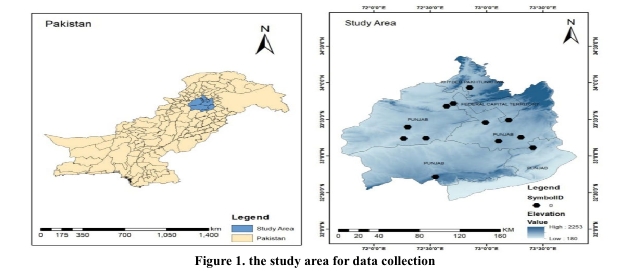
Study Design: A comprehensive study was carried out on commercial broiler farming practices in the Potohar region of Pakistan between March 2022 to December 2023. A cross-sectional survey was conducted in the districts Rawalpindi, Attock, Chakwal, Khushab and Haripur which were selected for this study (Figure 1). The northern Punjab region has a high density of poultry farms and reflects a diverse combination of commercial and rural farming systems.
The total of 26 conventional and modern farms with a cumulative bird population of 0.618 million (farm sizes range 3000-30000 birds in each shed) included in the study, farms that provided informed consent and agreed to share accurate production and health records were selected among these districts. We excluded those farms that didn’t provide accurate farm data. The information was collected from farm owners and supervisors by conducting detailed interviews.
Data Collection: A questionnaire was developed to collect the data following a similar format of the questionnaire used in previous studies from China ((Al-Mustapha et al., 2020). The farm data was collected using a pre-tested survey using researchers administered questionnaire/data collection tool (DCT). The research questionnaire consisted of five main
sections: 1) Farm characteristics and farm management protocols; 2) Sociodemographic characteristics of farmers; 3) Farmer’s strategies for disease prevention and control; 4) Knowledge and training of farmers and their technical staff on
the use and resistance of antibiotic; 5) Mortality, weight gain and feed conversion ratio of each farm. The questionnaires were completed by the researcher during the first visit to the farms, and each interview lasted approximately one hour. Each farm was then visited once per week, (five visits in total), to record the average weight, mortality, medications and feed conversion ratio of the flock during the first to fifth weeks of production. The study was approved by the Ethical Research Committee of Quaid-i-Azam University, Islamabad, Pakistan No.#BEC-FBS-QAU2023-532.
Data Management and Analysis: Data sheets, prepared by using Microsoft Excel 2016 and RStudio IDE (version 2024.09.1, Build 394) were used for further univariate and multivariate analysis. Univariate analysis was performed on weight gain, mortality and antibiotic usage, whereas multivariate analysis, including MCA on management-related categorical variables and cluster analysis on weekly flock performance data. To ensure standardized data collection using a structured questionnaire across all farms, with consistent variables defined.
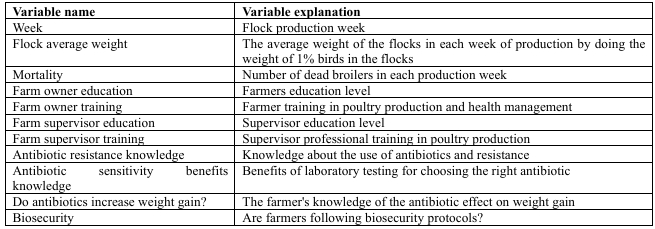
Categorical variables used in MCA were pre coded and verified to minimize bias and ensure comparability across responses. The results of the categorical variables in Table 1 were used as input for a multiple correspondence analysis (MCA), to examine clusters of similarity among the farms included in the study. MCA was performed using the function of the R package FactoMineR RStudio 2024.04.1 Build 748© 2009-2024 Posit Software, PBC (Husson et al., 2011).
Table 1. Data on the variables listed in the table were collected for each flock.
The weight gain was determined by the initial average weight of the birds and the final weight at the end of each production week. Mortality, medication including antibiotics and disease recorded weekly for the 26 flocks were also subjected to cluster analysis, to identify clusters of similarity among the flocks across a production cycle. Cluster analysis was performed with PC-Ord5 using the Jaccard grouping and Ward’s linkage method (McCune and Mefford, 2011).
RESULTS
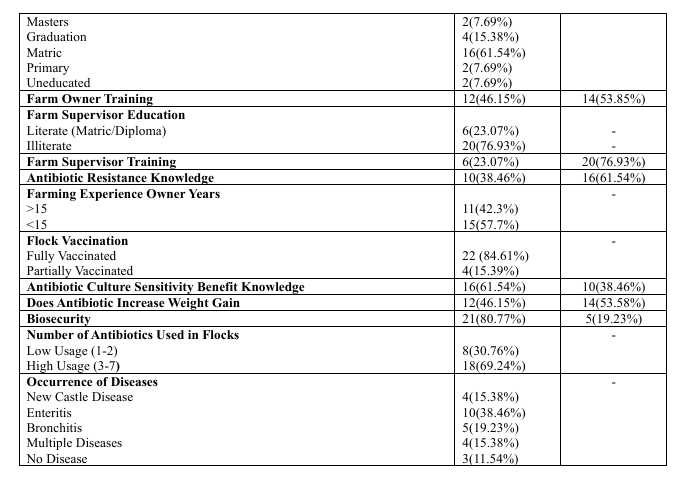
The flock and farm characteristics of the surveyed farm (N=26) reveal crucial operational and demographic insights. All the farmers were male (100%), with the majority (61.54%) having completed education equal to matriculation. Table 2 further demonstrates the execution of biosecurity practices (80.77%) and full flock vaccination (84.61%) across most farms. Additionally, the table also provides statistics on farmer experience, antimicrobial resistance awareness knowledge, and the prevalence of common infections or diseases on farms such as bronchitis, enteritis and new castle disease.
Table 2. This table shows a summary of responses to categorical variables during the interviews with the 26 participating farms is summarized below.

MCA-based correlation pattern of farm practices: Our multiple corresponding analyses reflect the indispensable relationship between educational levels with farming practices across different dimensions.
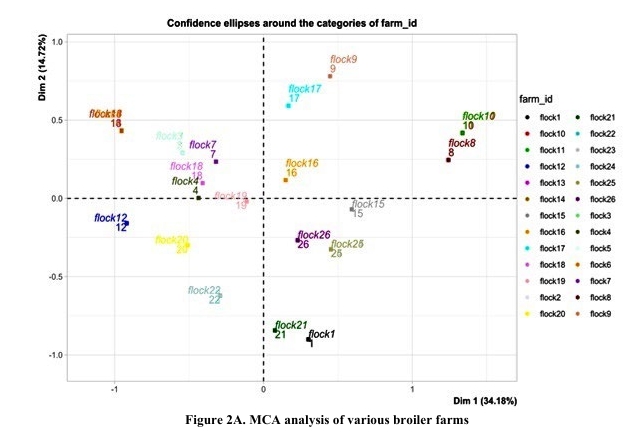
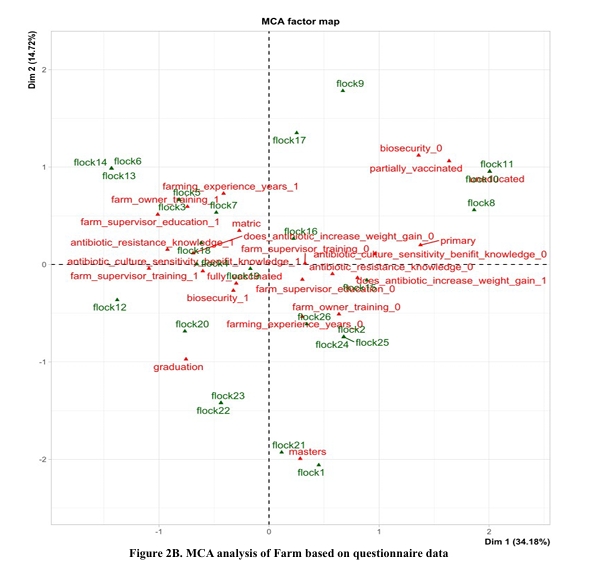
In the first axis individuals with a primary education level have a correlation coefficient of 1.377 and those
uneducated have a correlation coefficient of 2.005 which is particularly linked with less suitable farming practices. Moreover, individuals with high education backgrounds like graduates (-0.754), and master’s degree holders with a correlation coefficient of (0.284) are aligned with more positive results. The second dimension further explains practices related to training and knowledge such as farm owner training correlation. Those without training correlate to -0.510 and those who got the training correlate to 0.595 whereas farm supervisor education significantly influences such practices with a c correlation of -0.154 for uneducated and 0.514 for educated. Particularly, a high correlation was found for those who have better knowledge about antibiotic resistance with a correlation of -0.096 no knowledge about antibiotic resistance and 0.154 correlations for those who know about antibiotic resistance.
On the other hand, those who follow biosecurity practices are associated with better results and income generation. For instance, following biosecurity measures correlated with −0.267, whereas not practicing them correlated with 1. 121.. These findings elucidate the vitality of educational interventions and farming-oriented training in the improvement of management strategies and sustainable farming practices (Figure 2A&B).
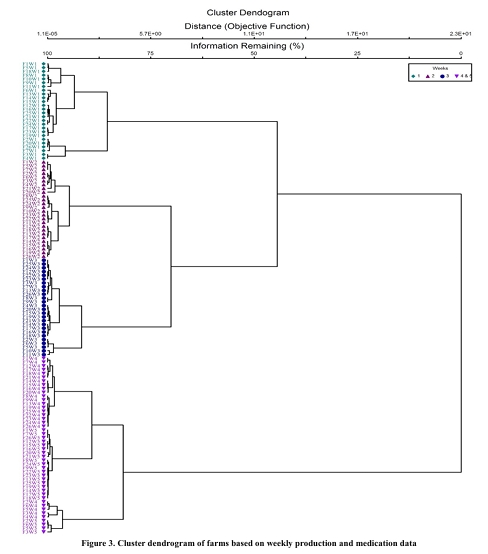
Cluster dendrogram based on farm practices: The findings of Cluster analysis show the distribution of variables registered weekly for each of the 26 flocks shown in (Figure 3). The first has all the variables and data documented in the first week, followed by the 2nd and 3rd. Cluster four has all the variables documented in weeks 4th and 5th. The clustering of the 4th and 5th week variables indicates that there is very little variation observed in the flocks in both weeks.
The farms with the same weekly weight gain, mortality pattern and medication were clustered together and created different clusters. The flocks sampled during week 1 tended to cluster closely, indicating uniformity in managemental practices, including consistent supplement strategies and prophylactic antibiotic use. In contrast, week 5 flocks showed more dispersed clustering, indicating divergent late-cycle health outcomes and intervention strategies among farms. Notably, flocks with high mortality and inconsistent antibiotic usage such as F2W3, F2W4 clustered separately, suggesting ineffective disease control. Interestingly, some high-performing flocks with strong high weight gains clustered apart due to high mortality, indicating that weight alone is not an indicator of flock health.
Flock-level mortality-weight relationship and Feed Conversion Ratio (FCR): A total of 26 broiler flocks comprising 0.618 million birds were evaluated for production performance.
Table 3. Summary of flock size, average body weight, mortality percentage and feed conversion ratio (FCR) for 26 commercial broiler flocks.
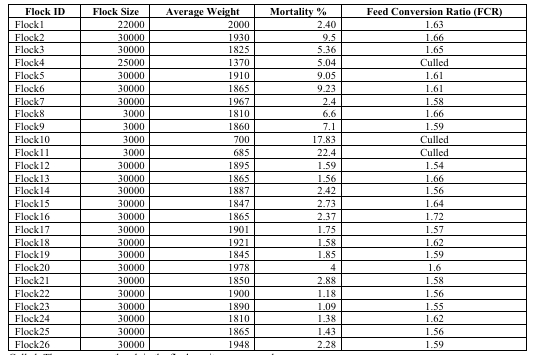
Culled=There was an outbreak in the flock so, it was removed .
The average flock mortality ranged from 1.09% to 22.4% while FCR values varied between 1.54 to 1.72 among completed cycles. Linear regression identified FCR as a significant predictor of mortality percentage (β = 20.5, p < 0.0001) (Table 3). Flocks with higher FCRs consistently showed elevated mortality, highlighting the link between feed efficiency and flock health, suggesting that higher in the flocks, likely due to underlying disease pressure (Figure 4 A & B), poor food conversion or environmental stress.
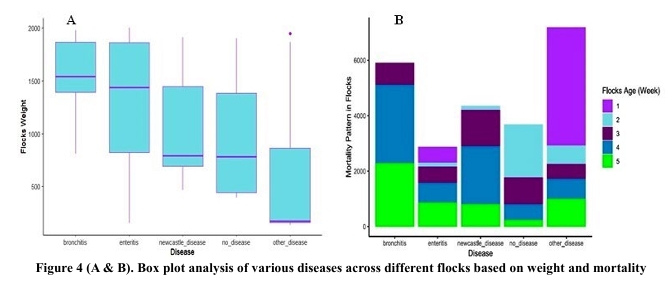
These results highlight the substantial inter-flock heterogeneity in mortality and suggest underlying management and health-related factors influencing performance, which require flock-specific management strategies to overcome mortalities without affecting growth performance. Antibiotic usage trends during different stages of production and diseases: The (figure 5) shows the different classes
of antibiotics used in poultry flocks. The different colors showed the different classes of antibiotics.
The number of antibiotic classes used in flocks ranged from 2-7 with highest observed diversity in flock 3 and flock 21, each receiving antibiotics from 7 and 5 different classes, respectively, including polymyxins, sulfonamide, tetracyclines, macrolides and quinolones. Notably, polymyxins (e.g., colistin) were commonly used in several (76.92%) flocks, despite their classification as a last resort antibiotic for prophylaxis and treatment of flocks.
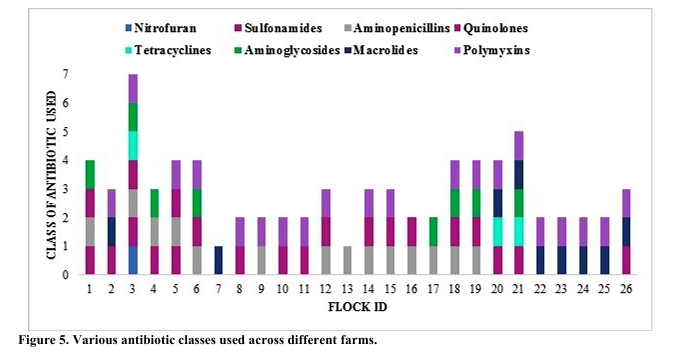
The second highest used antibiotic was (65.38%) for quinolones and (53.84%) for amoxicillin. In addition, the macrolides (34.61%) and aminoglycosides (30.76%) were used by farmers. The ratio of sulfonamides (15.38%), whereas the lowest used antibiotics were recorded as tetracycline (11.53%) and nitrofuran (3.84%).
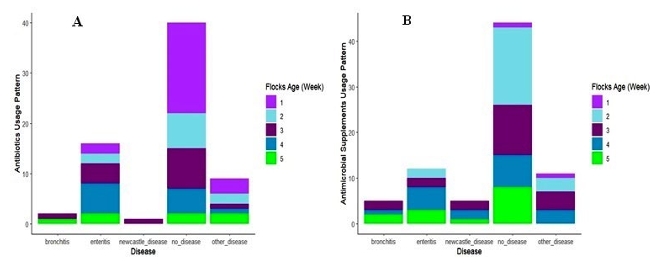
Figure 6 (A & B). Antibiotics and antimicrobial supplements are used in flocks during different weeks and for different diseases
Among the 26 flocks, the antibiotics were administered 40 times in total without any diagnosed infection or disease, indicating routine prophylactic use. Week 1 alone accounted for 42.5% (n= 17/40) of the antibiotic usage, indicating a clear bias toward prophylactic antibiotic usage in early chick. In contrast, flocks diagnosed with enteritis contributed 16% of total antibiotic use, with peak usage observed in week 4 (50%). Other diseases (9%), whereas bronchitis
(3%) and Newcastle disease (2%) contributed less to antibiotic usage (figure 6 A). The Pearson’s Chi square test indicated a statical significant link between antibiotic usage frequency and flock disease status across weeks (χ² = 38.74, df = 16, p= 0.0012), showing that the presence of disease only partially explains the observed variation in antibiotic usage, suggesting other influencing factors such as preventive practices, farm management strategies or seasonal trends may also play a role.
Mostly antimicrobial supplements used to prevent infections in the flocks (Figure 6B), with no clinical disease (n=43). Unlike antibiotics, supplement use peaked in week 2 (35%) and was more evenly distributed during the later stages of production (week 3-5), implying a more sustained but generalized approach to flock supplementation. Flocks with enteritis received 12.1% of antimicrobial supplements, predominantly during weeks 3 and 4, while Newcastle and bronchitis groups received a minimal amount (6% and 4.5%, respectively). The statistical significance with (χ² = 26.15, df= 16, p = 0.049) confirmed a positive relationship between supplement use and disease presence.
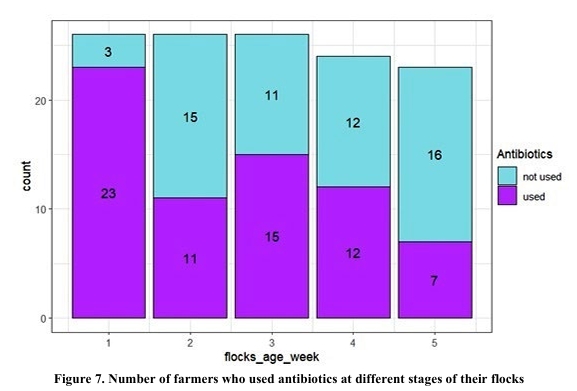
Antibiotic usage patterns were monitored across flocks during week 1 to week 5 of the broiler production cycle. The data revealed that antibiotics were most frequently administered during the first and third week of production. As a prophylactic measure, farmers used antibiotics from the first week of life (88.46%). The usage of antibiotics then decreased to (42.30%) in the second week, (57.69%) in the third week, (50%) in the 4th week while in 5th week (30.43%) (Figure 7).
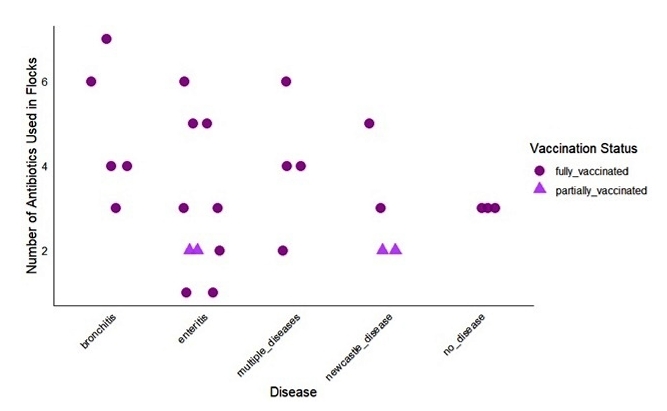
Figure 8. Number of antibiotics used in relation to disease and vaccination status of the flocks
The usage of antibiotics in different flocks concerning vaccination status and occurrence of diseases. During the occurrence of bronchitis and Newcastle disease, especially in viral outbreaks (26.92%) of farmers used more than two antibiotics and their flocks were fully vaccinated. In enteritis, farmers used multiple antibiotics for the treatment (Figure 8).
DISCUSSION
Our investigations highlight the pattern of antibiotic usage, disease prevalence, weight gain and mortality within the broiler flock of Rawalpindi and Khyber Pakhtunkhwa regions of Pakistan. This study collected data across all five weeks of the production cycle, providing a detailed view of broiler production in technical dynamics. Through MCA and linear mixed-effects regression model, we identified an indispensable interaction between weight gain and mortality, disentangling the impact on collective flock health and productivity. Notably, three farmers were impelled to cull their infected flocks due to a Newcastle disease infection, showing the drastic impact of the outbreak on production, as these
two variables are interlinked.
These types of findings have already been reported in a previous study (Umair et al., 2021). The cluster dendrogram analysis explains four different farm groups and shows the farms into four groups with similar variables, including weight gain, mortality, disease occurrence, and medication by applying antibiotics. These clusters help in the classification of flocks based on health conditions enabling targeted planning for fostering management and production results.
By grouping the affected flocks through their similarity and dissimilarities with their healthier counterpart. We can apply and suggest various strategies to control disease outbreaks and foster flock health. Our results highlight a severe issue: the prescription and usage of antibiotics in our country are insufficiently regulated, especially in the livestock and poultry sectors, where extensive gaps exist. This lack of management and regulation is an essential factor contributing to the huge extra-label use of antibiotics.
The need for farmers’ proper education and training of farm supervisors are vital for gaining sustainable production practices. Label use of antibiotics has been coupled with the development of drug resistant microbial infection in living organisms an issue arising in previous studies (Nisar et al., 2017; Rahman and Mohsin, 2019).
Alarmingly, our research work found that antibiotic consumption in broilers is highest during the first week of the rearing cycle, initially for disease prevention, with over 80% of farmer communities applying antibiotics to their broiler farms. Among the antibiotics, enrofloxacin and colistin were the most frequently used, raising issues due to their role in the emergence of superbugs (Guetiya Wadoum et al., 2016; Wongsuvan et al., 2018). The prevalence of colistin use as a last-resort antibiotic was particularly high (76.92%), which is very similar to earlier findings of colistin use in Pakistan (Habiba et al., 2023), followed by quinolones (65.38%) and amoxicillin (53.84%).
These results are matched to previous studies carried out in Pakistan (Umair et al., 2021). This is compared with other countries, where antibiotic usage was reported as 76% in Europe (Joosten et al., 2019), 61% in Belgium (Persoons et al., 2012), 63% in Thailand (Wongsuvan et al., 2018) and 36% in Vietnam (Cuong et al., 2019). However, it is important to note that the reported figure for Europe largely reflects historical data or therapeutic usage under veterinary supervision.
Importantly, however, Regulation (EC) No 1831/2003 of the European Union banned the use of antibiotics as growth promoters in animal feed at the beginning of January 1, 2006. Since then, antibiotics use in poultry has significantly declined in many EU countries, particularly for non-therapeutic purposes (Anonymous 2005). The European Medicines Agency 2023 reported that antibiotic sales for food-producing animals in the EU declined by 53% from 2011 to 2022, with the sharp reduction in Category B (high-risk) antimicrobials, while Category D (first-line treatments) continues to be widely used (Anonymous 2023).
The overuse of colistin in poultry flocks is notably concerning, giving it crucial importance in controlling and treating gram-negative bacterial diseases in human beings. In our study, colistin is the most commonly used antibiotic in the flock whereas the resistance of colistin reported earlier in Pakistan was 26% (Noreen et al., 2022), 30% reported by (Dawadi et al., 2021) in South Asia and 41.1% (Badr et al., 2022) in Egypt. The overuse of colistin contributed to the emergence of colistin resistance genes (mcr-family), posing an important one health threat through zoonotic transmission (Liu et al., 2016).
This highlights an emerging threat that could critically limit treatment choices for superbugs. Therefore,
urgent regulatory measures are mandatory to restrain the use of colistin in the poultry industry of Pakistan to safeguard public health. Our research work also describes that mostly antibiotics are used for prophylactic measures, and during the occurrence of different diseases including enteritis, yolk sac infection, mycoplasma, early chick mortality, Newcastle disease and bronchitis. Although previous studies have reported Newcastle disease and bronchitis are most commonly prevalent health issues in commercial poultry flocks (Umair et al., 2021). Our findings showed that enteritis was the most
frequently observed condition in the sampled broiler farms, followed by Newcastle disease and bronchitis. Terrifyingly, some farmers rely on their personal experiences or their farm manager or supervisor rather than consulting a veterinarian for antibiotic use. Such practices lead to improper doses, incorrect combinations and incompatible choice of drug for the treatment of infection and improper adherence withdrawal period.
This practice combined with direct purchase of antibiotics from different dealers contributes to the overuse of antibiotics and with a significant increase in antibiotic resistant bacteria. This problem is prevalent in other countries of the world with low and middle income (Braykov et al., 2016; Oberoi et al., 2016; Al-Mustapha et al., 2020). Moreover, among the other critical issues, the violation of the withdrawal period is among the most critical issues.
In this issue, a high antibiotic quantity is applied to chicken which poses crucial public health issues. These findings are in line with the previous studies (Guetiya Wadoum et al., 2016; Al Mustapha et al., 2020). On the other hand, most farmers have applied good biosecurity practices on their poultry farms, but the waste management was improper and inadequate. Contamination of bedding materials with antibiotics excreted to feces are used as manure increasing the risk of contamination in the environment with antibiotics and multidrug-resistant bacteria (Koutsoumanis et al., 2021).
The association between animal feces and the spread of antimicrobial resistance mentioned in our study is well supported in previous studies ((Yeom et al., 2017; Masood et al., 2023). Our results show that flocks were generally healthy during the first two weeks of their production cycle.
A previous study (Mahmood et al., 2024) described that due to prophylactic use of antimicrobial treatments, most of the flock were healthy during these critical stages of life. Moreover, bronchitis infection, Newcastle disease and enteritis were common after the second week. Enteritis affected the flock all over the production cycle, with high feeding rate and associated metabolic issues likely contributed to this condition. These findings emphasize the importance of proper antibiotic use, improved flock management practices, farmer education and training and implementation of policies through effective legislation, all of which are essential for reducing the risk of illness, improving flock health and
productivity and most importantly, combating antibiotic resistance.
Conclusion: This study shows that intensive broiler farming is an important player in the poultry industry of Pakistan. Husbandry practices differ from farmer to farmer. To maintain infection control, the farmers usually use antibiotic combinations. Based on owner-reported data, antibiotic usage in most flocks was not linked to clinical diagnosis, highlighting the need for improved diagnostic support and stewardship in poultry production systems. Our findings describe the strength of educational interventions and farming-oriented training in improving farm production and management strategies for sustainable farming practices and ensuring food safety and security.
Funding: This project did not receive any specific financial assistance to carry out this work.
Conflicts of Interest: The authors declare that no financial or any other conflicts of interest associated with the manuscript exist.
Data availability Statement: The datasets used and/or analyzed during the current study are available from the corresponding author upon reasonable request.
Authors’ Contribution: HM Writing – original draft, Formal analysis, Data curation, Conceptualization ASRD Data Analysis, Co-supervision, Resources SHA Data Collection, AA, MB Writing – review & editing, Methodology, MKS, AAS, Validation, Software, Investigation SK Writing – review & editing, Supervision, Project administration, Funding acquisition, Conceptualization.
REFERENCES
A1-Mustapha, A.I., V.O. Adetunji and A.J.A. Heikinheimo (2020). Risk perceptions of antibiotic usage and resistance: A cross-sectional survey of poultry farmers in Kwara State, Nigeria. Antibiotics. 9(7): 378.
https•]/doi.o@10.3390/antibiotics9070378
Anonymous- (2005). European Commission, Ban on antibiotics as growth promoters in animal feed enters into effect. Europa. , Brussels.
Anonymous- (2025). Economic Survey, Economic Affairs Division, Govt. Pakistan. , Islamabad.
Anonymous. (2023). European Medicines Agency, Sales of veterinary antimicrobial agents in 31 European countries in 2022: Trends from 2010 to 2022. Publications Office of the European Union; Luxembourg.
Badr, H., A. Samir, E.I. El-Tokhi, M.A. Shahein, F.M. Rady, AS. Hakim and S.F- Ali (2022). Phenotypic and genotypic screening of colistin resistance is associated with emerging pathogenic Escherichia coli isolated from poultry. Vet. Sci. https://doi.org.ilO.3390’vetsci9060282
Braykov, N., J. Eisenberg, M. Grossman, L. Zhang, K- Vasco, W. Cevallos and C. Marrs (2016). Antibiotic resistance in animal and environmental samples associated with small-scale poultry farming in northwestern Ecuador. Msphere. 1(1): 10-1128. https://doi.org/l().1 128’msphere.00021•15
Cuong, N.V.s D.H. Phu, N.T.B. Van, B.D Truong, B. T. Kiet, B. V. Hien and G. Thwaites (2019). High-resolution
monitoring of antimicrobial consumption in Vietnamese small-scale chicken farms highlights discrepancies between study metrics. Front. Vet. Sci. (6): 174. https:’/doi.org/10.3389/fvets.2019.M)174
Dawadi, P. , S- Bista and S. Bista (2021). Prevalence of Colistin-Resistant Escherichia coli from Poultry in South Asian Developing Countries. Vet- Med- Int- 2021( I 6398838. https:/,/doi.org/10.1155/2021 ‘6398838
Guetiya Wadoum, R., N. Zambou, F. Anyangwe, J. Njimou, M. Coman, M.C. Verdenelli and A. Cresci (2016). Abusive use of antibiotics in poultry farming in Cameroon and the public health implications. Br. Poult- Sci. 57(4): 483—493 https:”doi.org/lO.1080/000716682016.1180668
Habiba, U-E., A. Khan, E .J. Mmbaga, LR. Green and M. Asaduzzaman (2023). Use of antibiotics in poultry and poultry farmers—a cross-sectional survey in Pakistan. Front. Public Health. II,1154668.
https:,Vdoi.org/10.3389ffpubh.2023.1154668
Hussons F., and S. Lé, J. Pages. (2011). Exploratory multivariate analysis by example using R. Vol- 15. CRC Press; Boca Raton (USA). 1-60 p
Joosten, P. , S. Sarrazin, L. Van Gompel, R. E. Luiken, D. J. Mevius, J.A. Wagenaar and J. Dewulf (2019). Quantitative and qualitative analysis of antimicrobial usage at farm and flock level on 181 broiler farms in nine European countries. J. Antimicrob. Chemother. 74(3): 798—806. https://doi.o@l().1093/jae/dky498
Koutsoumanis, K., A. Allende, A. Ålvarez-Ordönez, D. Bolton, S. Bover-Cid, M. Chemaly and F. Hilbert (2021). Role played by the environment in the emergence and spread of antimicrobial resistance (AMR) through the chain. EFSA J. 19(6): e06651. https://doi.org/10.290Yj.efsa.2021.6651
Krishnasamy, V. , J. Otte and E. Silbergeld (2015). Antimicrobial use in Chinese swine and broiler production. Antimicrob Resist. Infect. Control. 17.
Liu, Y.Y., Y. Wang, T.R. Walsh, LEX. Y i, R. Zhang, J. Spencer, Y. Doi, G. Tian, B. Dong, X. Huang and L.F. Yu (2016). Emergence of plasmid-mediated colistin resistance mechanism mcr-l in animals and human beings in China: a microbiological and molecular biological study. Lancet Infect- Dis. 16(2): 161—168.
https:,”d0i.org/10.1016/S1473-3099(15)00424-7
Mahmood, Q., L Chantziaras and J. Dewulf (2024). Quantification of Antimicrobial Use on Commercial Broiler Farms in Pakistan. Animals. 14(23): 3510. httpsfld0i.org/lO.3390/ani14233510
Masood, H. , S.U. Khan, S.M. Khan, A. Nawaz, S.H. Wajid, A-U. Rehman and A. Abdullah (2023). Climate ChangesMitigation and Sustainable Bioenergy Harvest Through Animal Waste. 1st Ed. Springer Nature; (Switzerland).241-262 p
McCune, B. and M.J. Mefford (2011). PC-ORD. Multivariate analysis of ecological data. MjM Software; Gleneden Beach, Oregon.
McEwen, S.A. and P. Collignon (2018). antimicrobial resistance in bacteria from Livestock and companion animals.1st Edition. ASM Press; Washington, DC. 521–547 p
Naghavi, M., S.E. Vollset, K.S. Ikuta, L.R. Swetschinski, A.P. Gray, E.E. Wool and D.M. Dekker (2024). Global burden of bacterial antimicrobial resistance 1990–2021: A systematic analysis with forecasts to 2050. The Lancet. 404(10459): 1199–1226. doi: 10.1016/S0140-6736(24)01867-1
Nayiga, S., M. Kayendeke, C. Nabirye, L.D. Willis, C.I. Chandler and S. G. Staedke (2020). Use of antibiotics to treat humans and animals in Uganda: A cross-sectional survey of households and farmers in rural, urban and peri urban settings. JAC-AMR. 2(4): dlaa082. https://doi.org/10.1093/jacamr/dlaa082
Nisar, M., M.H. Mushtaq, W. Shehzad, A. Hussain, J. Muhammad, K.V. Nagaraja and S.M. Goyal (2017). Prevalence and antimicrobial resistance patterns of Campylobacter spp. isolated from retail meat in Lahore, Pakistan. Food Control. 80, 327–332. https://doi.org/10.1016/j.foodcont.2017.03.048
Noreen, A., H. Masood, J. Zaib, Z. Rafaque, A. Fatima, H. Shabbir, A. Javeria, A. Habib, S. Noor, K. Dil and J.I. Dasti (2022). Investigating the role of antibiotics on induction, inhibition and eradication of biofilms of poultry associated Escherichia coli isolated from retail chicken meat. Antibiotics. 11(11): 1663.
https://doi.org/10.3390/antibiotics11111663
Oberoi, S., N. Chaudhary, S. Patnaik and A. Singh (2016). Understanding health seeking behavior. J. Fam. Med. Prim. Care. 5(2): 463–464. DOI: 10.4103/2249-4863.192376
Om, C. and M.L. McLaws (2016). Antibiotics: practice and opinions of Cambodian commercial farmers, animal feed retailers and veterinarians. Antimicrob. resist. infect. control. 5(1): 42. https://doi.org/10.1186/s13756-016-0147y
Otaigbe, I.I. and C.J. Elikwu (2023). Drivers of inappropriate antibiotic use in low- and middle-income countries. JAC Antimicrob. Resist. 5(3): dlad062. doi: 10.1093/jacamr/dlad062
Persoons, D., J. Dewulf, A. Smet, L. Herman, M. Heyndrickx, A. Martel and F. Haesebrouck (2012). Antimicrobial use in Belgian broiler production. Prev. Vet. Med. 105(4): 320–325. https://doi.org/10.1016/j.prevetmed.2012.02.020
Rasheed, M., W. Chaisowwong, P. Ong-artborirak and A. Thongprachum (2025). The use of critically important antimicrobials for human use in poultry farming in Pakistan: A cross-sectional study among different types of farmers. Vet. Integr. Sci. 23(1): 1–12. doi: 10.12982/VIS.2025.026
Sirdar, M. M., J. Picard, S. Bisschop and B. Gummow (2012). A questionnaire survey of poultry layer farmers in Khartoum State, Sudan, to study their antimicrobial awareness and usage patterns. Onderstepoort. J. Vet. Res. 79(1): 1–8. https://hdl.handle.net/10520/EJC122441
Umair, M., M.F. Tahir, R.W. Ullah, J. Ali, N. Siddique, A. Rasheed and M. Mohsin (2021). Quantification and trends of antimicrobial use in commercial broiler chicken production in Pakistan. Antibiotics. 10(5): 598.
https://doi.org/10.3390/antibiotics10050598
Rahman, SU. and M. Mohsin (2019). The under-reported issue of antibiotic-resistance in food-producing animals in Pakistan. Pak. Vet. J. 39(3): 323–328. doi: 10.29261/pakvetj/2019.037
Van Boeckel, T.P., J. Pires, R. Silvester, C. Zhao, J. Song, N.G. Criscuolo and R. Laxminarayan (2019). Global trends in antimicrobial resistance in animals in low-and middle-income countries. Science. 365(6459): eaaw1944. doi:10.1126/science.aaw1944
Van Boeckel, T.P., C. Brower, M. Gilbert, B.T. Grenfell, S.A. Levin, T.P. Robinson, A. Teillant, and R. Laxminarayan(2015). Global trends in antimicrobial use in food animals. Proc. Natl. Acad. Sci. 112(18): 5649–5654. https://doi.org/10.1073/pnas.1503141112
Vieira, A.R., P. Collignon, F.M. Aarestrup, S.A. McEwen, R.S. Hendriksen, T. Hald and HC. Wegener (2011). Association between antimicrobial resistance in Escherichia coli isolates from food animals and blood stream isolates from humans in Europe: an ecological study. Foodborne. Pathog. Dis. 8(12): 1295–1301. doi: 10.1089/fpd.2011.0950
Wongsuvan, G., V. Wuthiekanun, S. Hinjoy, N.P. Day and D. Limmathurotsakul (2018). Antibiotic use in poultry: A survey of eight farms in Thailand. Bull. World Health Organ. 96(2): 94. doi: 10.2471/BLT.17.195834.
Yeom, J.R., S.U. Yoon and C.G. Kim (2017). Quantification of residual antibiotics in cow manure being spread over agricultural land and assessment of their behavioral effects on antibiotic resistant bacteria. Chemosphere. 182,771–780. https://doi.org/10.1016/j.chemosphere.2017.05.084
Zhang, Q.Q., G.G. Ying, C.G. Pan, Y.S. Liu and J.L. Zhao (2015). Comprehensive evaluation of antibiotics emission and fate in the river basins of China: Source analysis, multimedia modeling, and linkage to bacterial resistance. Environ. Sci. Technol. 49(11): 6772–6782. doi: 10.1021/acs.est.5b00729