Author: Saad Jameel
Designation: Veterinarian, Mazoon Dairy Company, Oman
Email: saadjm66@gmail.com
Published: December 2025
Publisher: Industrial Experts Forums Pakistan
The time just after calving is very sensitive for dairy cows.
Milk production begins immediately, but the cow’s feed intake is still low. This imbalance often causes health problems called metabolic disorders. Good feeding management during this period helps to keep cows healthy, improve milk yield, and support quick recovery.
COMMON PROBLEMS AFTER CALVING
1. MILK FEVER
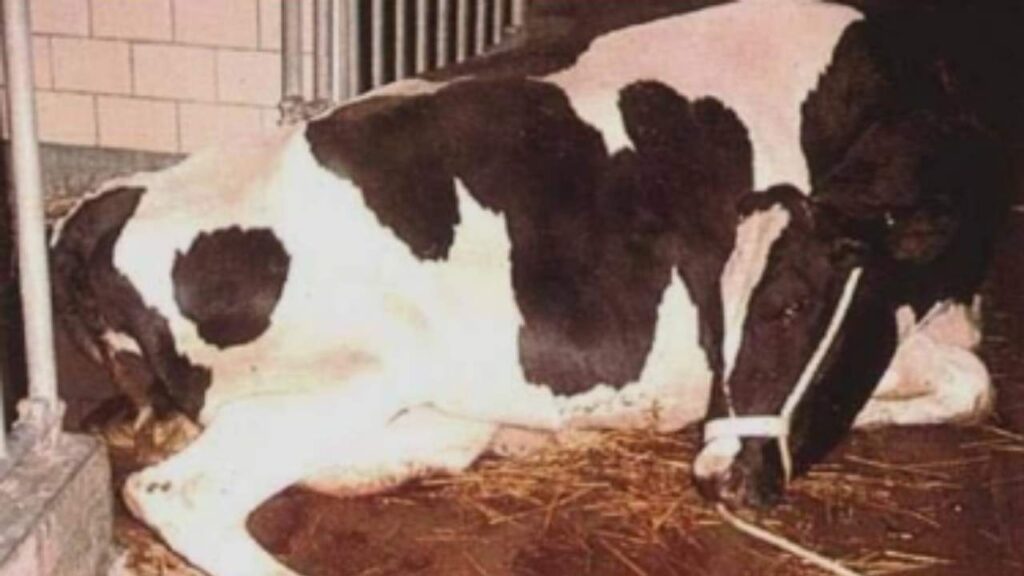
Milk fever (also called hypocalcemia) is a disease that usually occurs within 24–72 hours after calving. It happens when the cow’s blood calcium drops too low because a large amount of calcium is being released in milk.
Signs of Milk Fever
- Weakness, unable to stand
- Cold ears and nose
- Trembling or muscle weakness
- Cow lies down and cannot rise if not treated
Why It Happens
- High-yielding cows need a lot of calcium at calving.
- If the body cannot supply enough from feed or bones, blood calcium falls.
- Older cows are more prone
Prevention
- Feed low calcium diets during the dry period to train the cow’s body to mobilize calcium.
- Use anionic salts before calving to improve calcium absorption.
- Provide adequate magnesium in the diet.
- Give oral calcium bolus or drench immediately after calving, especially to high-producing cows.
Treatment
- Veterinary treatment with intravenous (IV) calcium solution is required for severe cases.
- For mild cases, oral calcium supplements may help.
2. KETOSIS (ENERGY SHORTAGE)
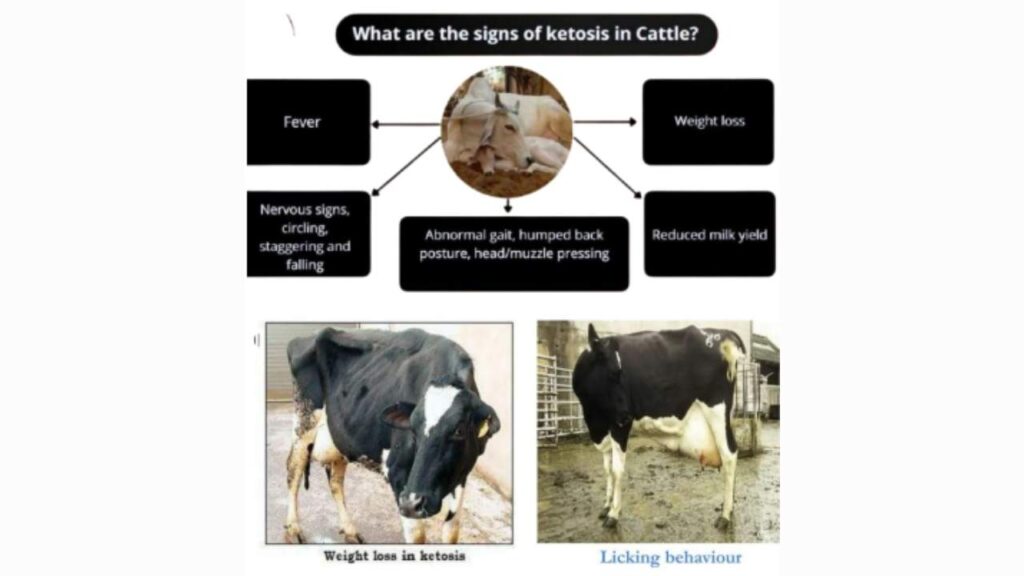
Ketosis is a metabolic disorder that occurs in high-yielding dairy cows, usually within the first 2–6 weeks after calving. It happens when the cow does not eat enough energy-rich feed to meet the high demand for milk production. The body burns too much fat, leading to ketone build-up in the blood.
Signs of Ketosis
- Reduced appetite (cow eats less, especially concentrates)
- Sudden drop in milk yield
- Weight loss
- Dullness or depression
- Sweet/fruity smell in breath, milk, or urine
Causes
- Negative energy balance after calving
- Over-fat cows at calving (body condition score >3.5)
- Low feed intake or poor-quality forage
Prevention
- Keep cows in moderate body condition (not too fat) at calving.
- Feed high-energy, good-quality forages and gradually increase concentrates.
- Use feed additives like propylene glycol, niacin, or rumen-protected choline in high-risk cows.
- Ensure cows have fresh, palatable feed and enough bunk space.
Treatment
- Oral drench of propylene glycol for 3–5 days.
- Glucose or short-term corticosteroid injections in severe cases.
3. DISPLACED ABOMASUM
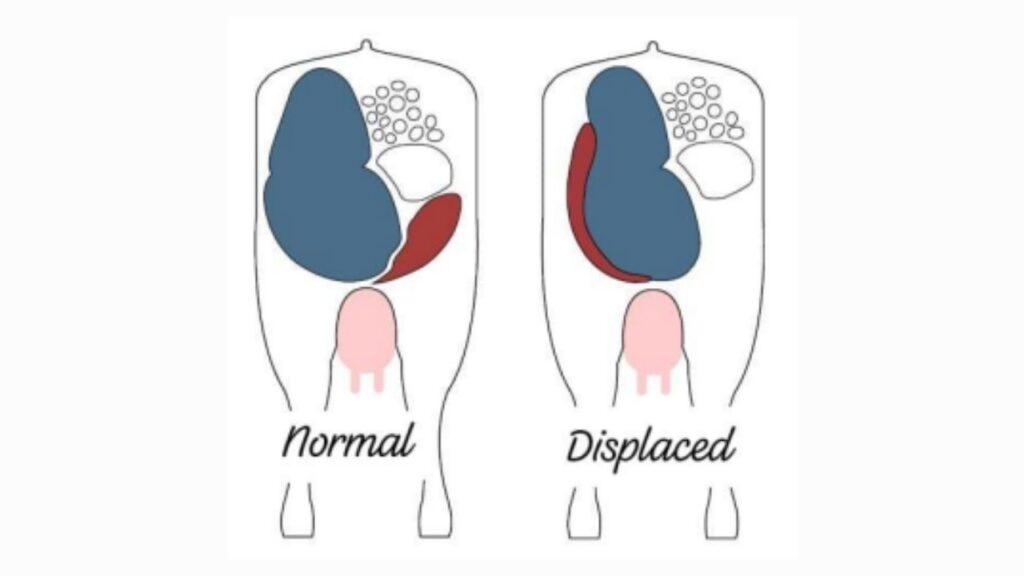
The abomasum (true stomach) normally lies on the floor of the abdomen. After calving, it can fill with gas and move (displace) either to the left side (LDA) or right side (RDA). This causes digestive upset and reduced feed intake.
Signs
- Drop in appetite (cow refuses grain, eats only roughage)
- Sudden fall in milk yield
- Weight loss
- Reduced rumen activity
- Sometimes a “ping” sound is heard when the abdomen is tapped (diagnosed by vet)
Causes / Risk Factors
- Low feed intake after calving
- High concentrate diets with little fiber
- Ketosis or other metabolic problems
- Overconditioned cows at calving
- Stress and overcrowding
Prevention
- Encourage feed intake immediately after calving
- Provide enough effective fiber in the diet
- Avoid sudden ration changes
- Prevent ketosis and milk fever through proper nutrition
- Ensure cow comfort and reduce stress
Treatment
- Requires veterinary intervention (rolling, surgical correction, or toggle pinning)
- Support with fluids and correction of underlying problems
4. FATTY LIVER
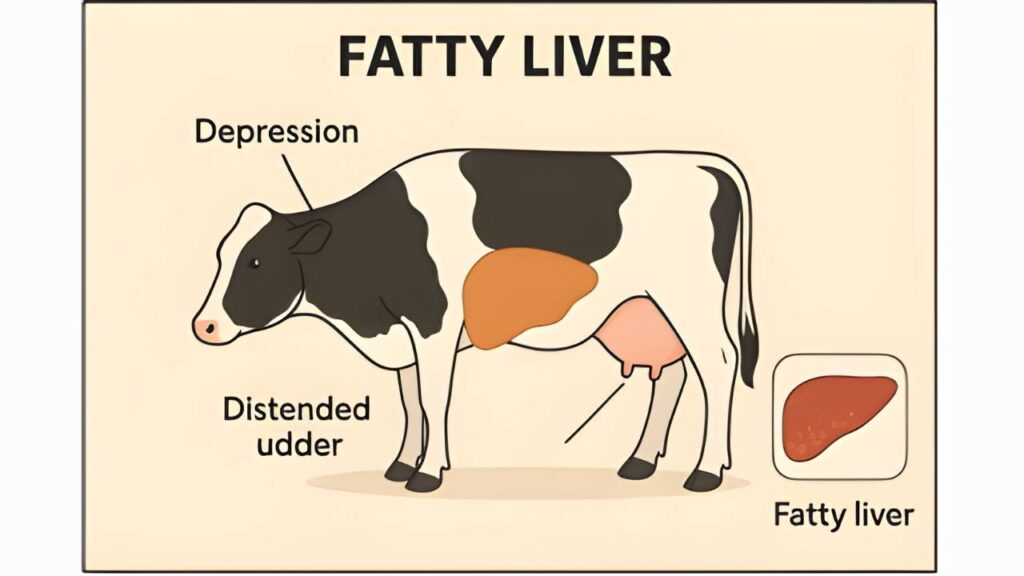
Fatty liver occurs when too much body fat is mobilized around calving and stored in the liver. This reduces the liver’s ability to function properly, leading to health and production problems. It usually happens in over-conditioned (fat) cows at calving.
Signs
- Reduced appetite
- Drop in milk yield
- Weakness and weight loss
- Often occurs along with ketosis
- Increased risk of other diseases (retained placenta, metritis, displaced abomasum)
Causes / Risk Factors
- Over-fat cows at calving (Body Condition Score > 3.5)
- Low feed intake before and after calving
- Negative energy balance in early lactation
Prevention
- Keep cows in moderate body condition at calving (not too fat)
- Provide good-quality forage and gradually increase concentrates after calving
- Use feed additives like niacin, choline, or propylene glycol in high-risk cows
- Encourage maximum dry matter intake after calving
Treatment
- Propylene glycol as an energy supplement
- Veterinary support with glucose, insulin, or other medications
- Correct underlying feeding and management problems
FEEDING TIPS TO PREVENT DISORDERS
1. Give Enough Energy
- Start with good quality forage and gradually add concentrates after calving
- Do not increase concentrate suddenly (max 1 kg extra per day)
- Use energy boosters like propylene glycol for weak or high-yielding cows
- Keep body condition moderate (not too fat, not too thin)
2. Provide Balanced Protein
- Mix rumen-friendly protein (like soybean meal) with bypass protein
- Balanced protein helps milk production and cow recovery
3. Ensure Calcium and Minerals
- Give oral calcium bolus/drench soon after calving to high-yielding cows
- Add magnesium in the ration to help calcium absorption
- Supply minerals like selenium, zinc, and vitamins A, D, E for strong immunity
4. Maintain Rumen Health
- Always provide long fiber (like hay or silage) to stimulate chewing
- Avoid sudden ration changes
- Use buffers (like sodium bicarbonate) if feeding high concentrate diets
5. Encourage Feed Intake
- Provide fresh feed several times a day
- Keep feed and water troughs clean
- Give enough space at the feed bunk (about 60 cm per cow)
- Reduce stress by avoiding overcrowding and ensuring comfortable resting areas
6. Simple Feeding Program After Calving
- First Week: Focus on palatable forage, slowly introduce concentrates
- Weeks 2–3: Gradually increase concentrates, keeping fiber constant
- High-Risk Cows: Give calcium supplements, glucose precursors, and liver-protective additives if needed
KEY MESSAGE
Healthy cows after calving depend on good feeding and cow comfort.
By ensuring energy-rich but balanced diets, proper mineral supply, and maximum feed intake, farmers can reduce metabolic problems, improve milk yield, and extend cow life.