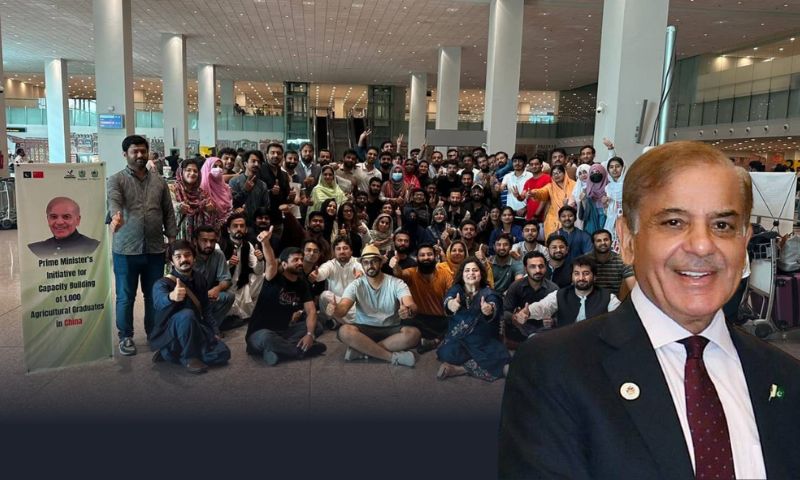
Misbah Zulfqar, Senior Scientist
Punjab Agriculture Department (Research Wing)
Over the course of three transformative months in China, I had the privilege of participating in a deeply enriching agricultural training program that combined rigorous academic instruction with immersive practical experiences. The program was meticulously designed to provide a multifaceted understanding of modern agricultural practices, advanced breeding technologies, food safety, ecological conservation, and rural revitalization.
Spanning lectures, laboratory work, field visits, and cultural immersion, the training broadened not only my scientific and technical knowledge but also deepened my appreciation for the harmonious coexistence of tradition and innovation in Chinese agriculture. China’s integrated system for food safety enforcement serves as a model for developing nations striving to modernize their agricultural sectors.
Through organic practices, composting, and pest control through biocontrol agents, China is developing farming systems that are both productive and environmentally responsible. This approach resonates with current global trends towards sustainable intensification. The lecture and field visit on my area of specialization Rapeseed Breeding and Production demonstrated China’s advances in hybrid rapeseed development, mechanized harvesting, and genetic resistance to pests.

RSM Feed Additives – Karachi & Hyderabad | Saadat International
Click Here
I learned about trait-specific breeding, genetic markers, and phenotypic selection tools that I can directly apply to my work in oilseed crop development. The field practices of soilless cultivation including hydroponics and aeroponics showed how China is meeting urban food demands using space efficient and environmentally friendly methods. In the sessions on the Current Situation and Trends of the Edible Fungi Industry, we analyzed market dynamics, consumer trends, and technological innovations in mushroom farming.
The virus-free seedling production also demonstrated how clean planting material can be ensured, while the operation of tissue culture workshops trained us in establishing small-scale labs for propagation of elite plant materials. Sessions on Corn, Foxtail Millet, and Sorghum Breeding introduced us to crop-specific challenges and breeding solutions. New technologies such as precision fertilization, microbial fertilizers, and soil conditioners were discussed. Visits to model farms showed how these technologies are practically applied for yield improvement and environmental protection.
Training on seed drying, packaging, and storage provided practical insights into maintaining seed viability. Lectures on China’s comprehensive regulatory framework for seed quality control also provided insights on Laws and Regulations on Seed Approval, Supply and the Registration System.
Living in China for three months allowed me to immerse myself in a society deeply rooted in values like respect, discipline, harmony, and community cooperation. I was particularly impressed by how Chinese villages and farming communities function collectively whether in managing irrigation, maintaining cleanliness, or celebrating harvests.
Career Opportunity – Veterinary Import/Export Sector
Click Here:
This sense of social harmony is something I wish to promote in rural Pakistan, where fragmentation often limits collective farming and cooperation. Our visits to the Terracotta Warriors and the Chinese History Museum, the stories of dynasties, agricultural revolutions, and scholarly traditions left a lasting impression on me. Through these excursions, I developed a newfound respect for preserving cultural identity while pursuing modernization something Pakistan, too, can learn as it charts its path to development.
I experienced traditional Chinese meals, learned about herbal teas, and even observed customs like calligraphy and tea ceremonies. These cultural exchanges enriched my global perspective and made me more appreciative of the diversity in our world. I now understand that science and culture must go hand-in-hand if agricultural development is to be inclusive and sustainable. The discipline and professionalism of Chinese institutions left a strong impression on me.
Whether it was the punctuality of university lectures, the precision of laboratory work, or the organization of field visits, everything was meticulously planned. This taught me the value of time management, collective responsibility, and organizational excellence. China is using its training programs to build international goodwill, promote cooperation, and spread sustainable technologies. This form of agricultural diplomacy is something that Pakistan can emulate by offering and receiving knowledge in a spirit of partnership.